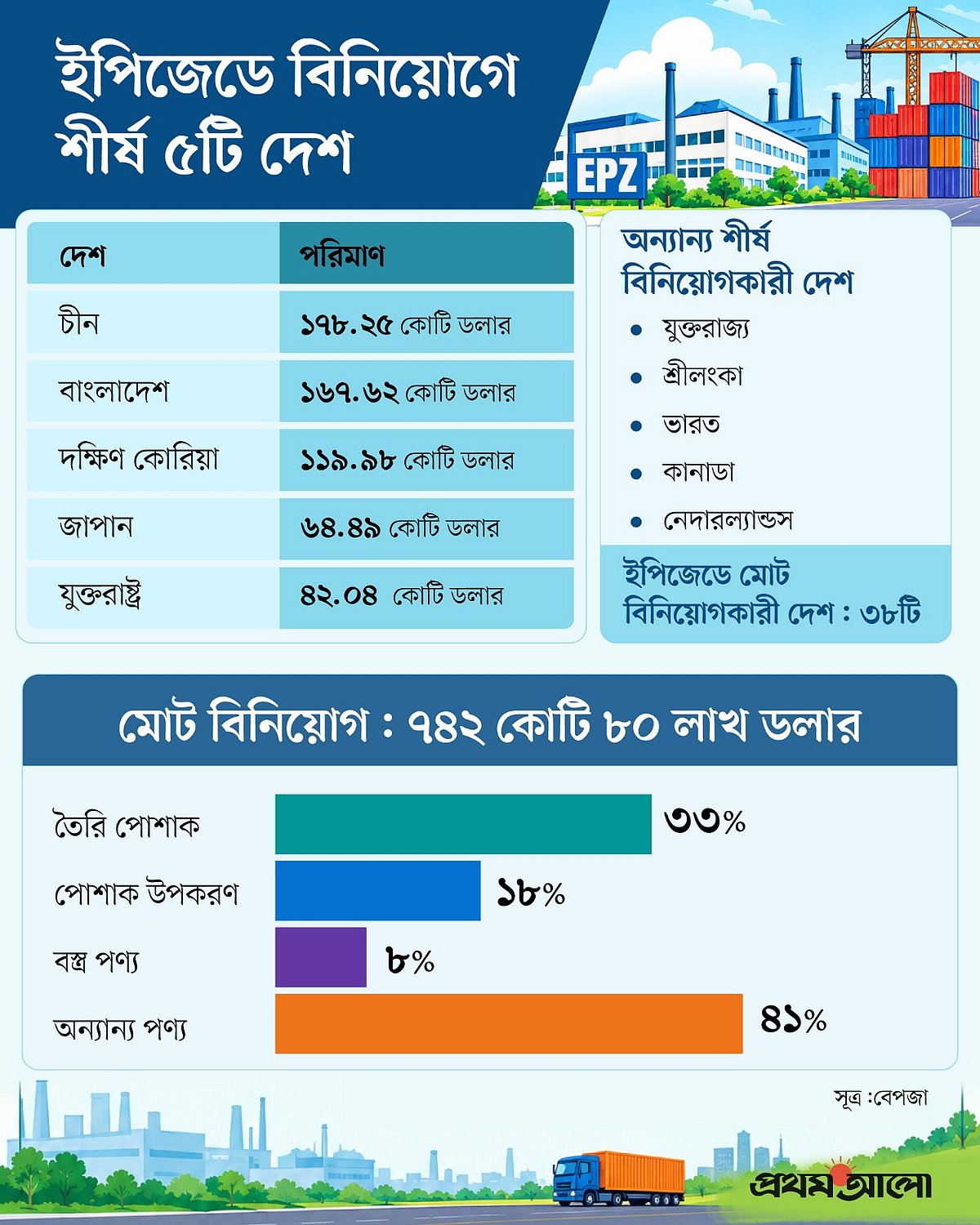
Export Processing Zones (EPZs) have long served as a vital engine for Bangladesh's export earnings, driving economic growth and industrialization. Among foreign investors, Chinese-owned companies have emerged as the leading contributors to investments within these specialized zones. According to the latest data from the Bangladesh Export Processing Zones Authority (BEPZA), a cumulative investment of $7.42 billion has been poured into the country's EPZs by investors representing 38 nations worldwide.
Individually, Chinese enterprises have secured the top position by investing a massive $1.78 billion, a figure that also encompasses ventures originating from Hong Kong and Taiwan. Following closely behind foreign direct investments, domestic Bangladeshi entrepreneurs hold the second-strongest position in the overall investment rankings. Joint-venture initiatives have also played a crucial role, with the domestic share calculated distinctively within the overarching framework of industrial development.

In addition to China, East Asian economic powerhouses such as South Korea and Japan have maintained a robust presence in the EPZ landscape. The United States also features prominently among the top tier of investors, alongside other prominent nations including the United Kingdom, Sri Lanka, India, Canada, and the Netherlands. The diverse portfolio of investors highlights the global appeal and strategic geographical advantage that Bangladesh offers to international manufacturers.
The genesis of EPZs in Bangladesh dates back to the early 1980s, with the formal establishment of the country's inaugural processing zone in the port city of Chattogram in 1983. Designed strictly for export-oriented manufacturing rather than domestic consumption, these zones have expanded significantly over the decades. Currently, BEPZA oversees a network of eight operational EPZs and two specialized economic zones across various regions of the country.
A major catalyst for attracting foreign capital to these zones is the array of fiscal incentives and robust policy support provided by the government. Enterprises operating within EPZs enjoy duty-free importation of raw materials under special bonded warehouse facilities, significantly enhancing their competitive edge in the global marketplace. As international trade dynamics continue to evolve, the continued influx of foreign investments into Bangladesh's EPZs remains a cornerstone of the nation's broader industrial and economic strategy.