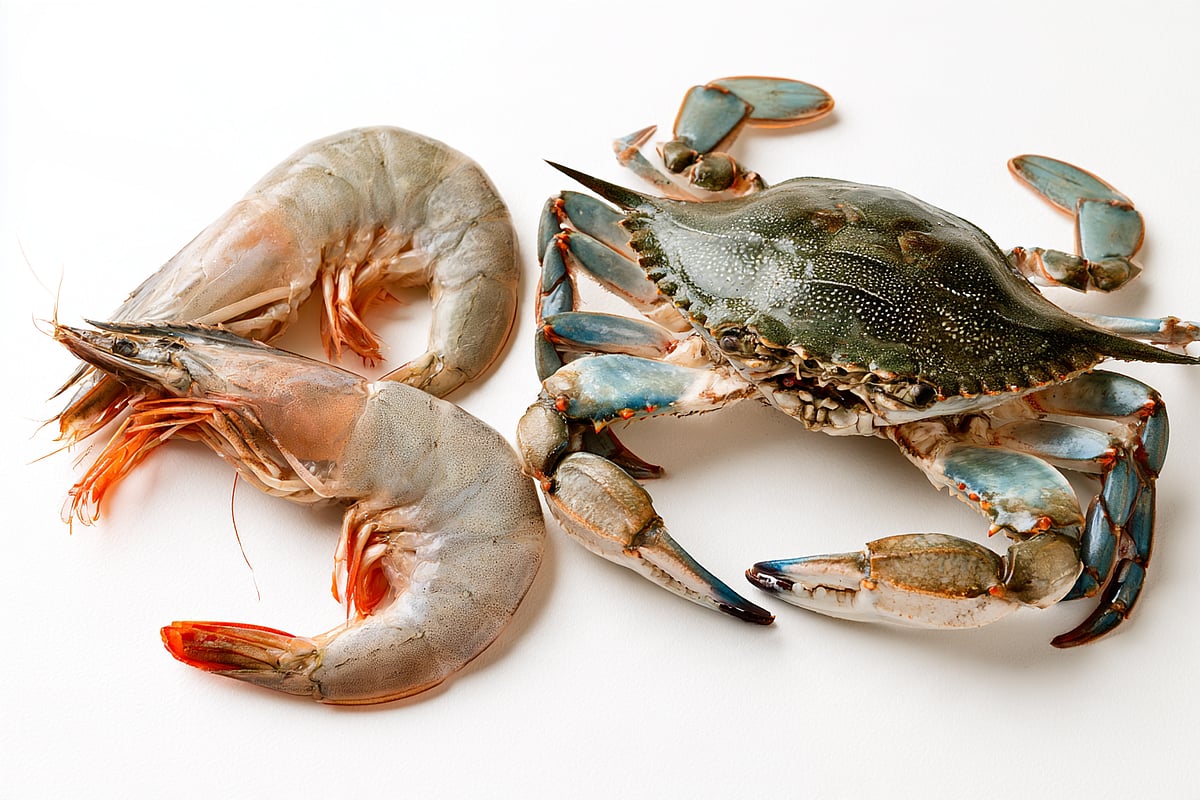
When we visit a fish market, it is common to ask for the price of 'shrimp,' often referring to it as a fish. However, the same linguistic courtesy is rarely extended to crabs. This seemingly trivial observation touches upon a fascinating intersection of biology and linguistics. As investigated by the Chitra Post desk, neither shrimp nor crabs are biologically classified as fish.
From a biological standpoint, both shrimp and crabs belong to the group known as crustaceans, characterized by their hard exoskeletons and jointed appendages. True fish are defined by the presence of a backbone and an internal skeletal structure. In contrast, crustaceans lack a spine and rely on their external shells for protection. While fish utilize fins for propulsion, these creatures use their jointed legs to navigate their aquatic environments.

So, why is the term 'fish' attached to shrimp? The answer lies more in human habit and linguistic evolution than in scientific taxonomy. Historically, humans have categorized various aquatic creatures based on their culinary utility and superficial appearance. Because shrimp possess an elongated body structure that somewhat resembles small fish, they were colloquially grouped with fish over generations. This phenomenon is not unique to Bengali; English also features misnomers like 'jellyfish' or 'starfish,' which, despite their names, are not fish at all.
Conversely, the physical structure of a crab is distinctively different. Their flattened bodies and unique locomotion do not evoke the same visual association with fish, which is likely why they were never linguistically grouped into that category. This naming convention serves as a reflection of human perception and cultural adaptation rather than a strict adherence to biological classification.
Ultimately, regardless of their scientific status, both shrimp and crabs remain highly valued culinary staples worldwide. While they may not be fish by the standards of marine biology, they have become inseparable parts of our gastronomic culture. This discrepancy highlights how language often evolves based on daily human experience and convenience, sometimes diverging from the rigid definitions of science.