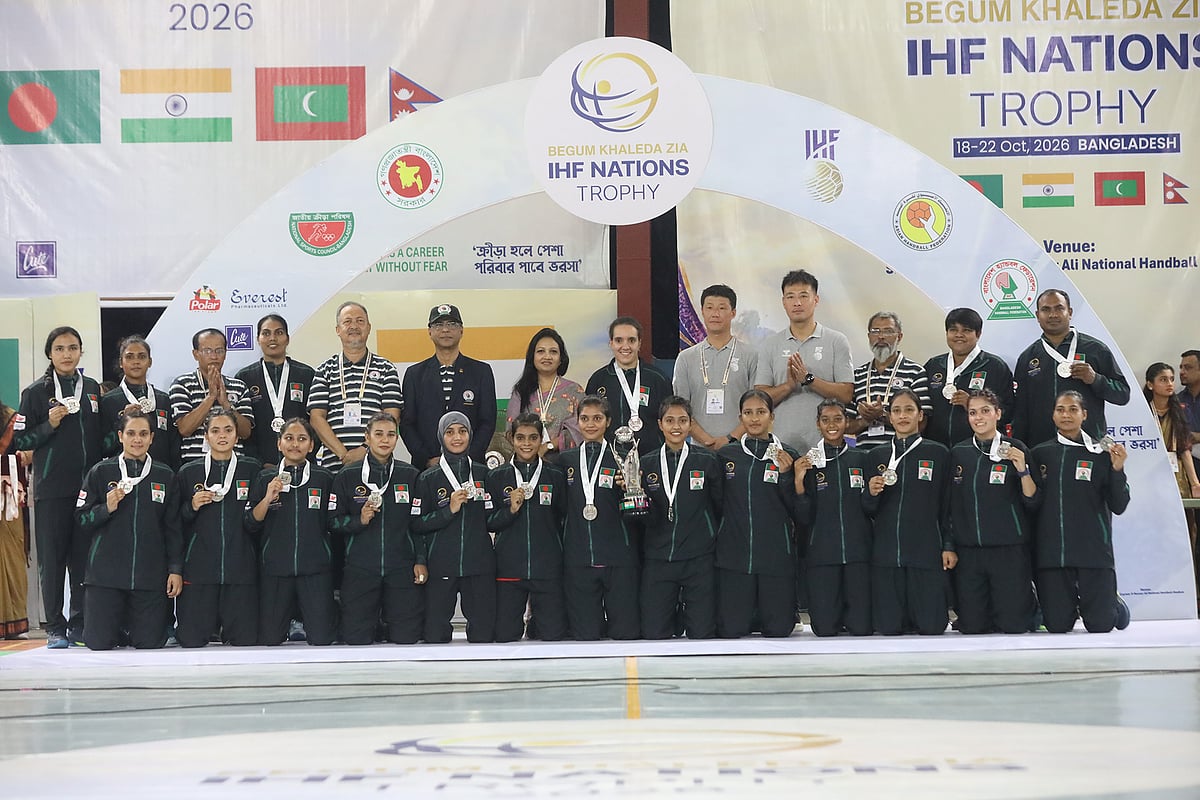
Lacking regular match practice and participating in international tournaments only on rare occasions, finishing as runners-up in the Begum Khaleda Zia IHF Trophy is no small feat for the Bangladesh women's handball team.
In the final held at the Shaheed Captain M. Mansur Ali National Handball Stadium in Paltan, the hosts suffered a 28–16 defeat against a formidable Indian side. However, the final scoreline hardly reflects the true spirit and grit of the Bangladeshi fightback.

During the group stage, the Bangladesh women's team had conceded a staggering 47 goals against the very same Indian team. In the final, the girls managed to narrow that gap significantly. For the first 15 minutes of the match, both teams fought neck-and-neck, with the scoreboard reading 6–6. Although India subsequently pulled ahead, Bangladesh refused to bow out of the contest, as India went into halftime holding a 14–9 lead.
After the break, however, India took full control of the match. Capitalizing on wing plays and fast breaks, they scored in quick succession to widen the margin, ultimately sealing a 12-goal victory. Throughout the tournament, Bhavana Sharma of the champion Indian side delivered stellar performances, earning her the tournament's Most Valuable Player award.
Despite the defeat in the final, Bangladesh's Spanish coach Ana Alonso expressed satisfaction with the team's overall performance. Rather than dwelling on disappointment, her tone radiated optimism for the future. "I am happy with the girls' performance today [yesterday]. They are improving. We must continue to move forward in this direction. I believe the team is on the right track," she stated.
The coach's primary concern centers around player fitness. According to her, in addition to being skilled handball players, the girls must develop into complete athletes. "We cannot just be players; we need to be comprehensive athletes as well," she noted, emphasizing the rigorous physical demands required of a top-tier handball player.