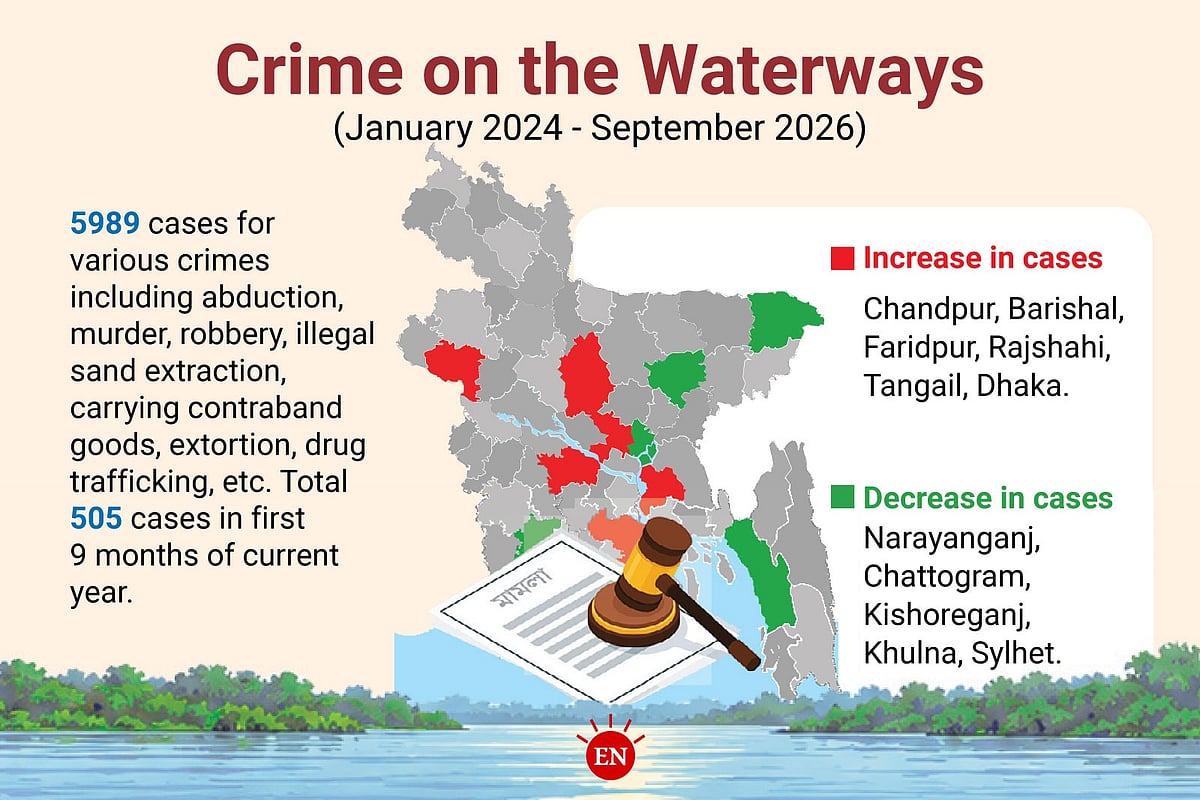
The waterways of Bangladesh are increasingly becoming hotspots for criminal activity, posing a severe threat to the lives and livelihoods of those who depend on the river. Fishermen are frequently falling victim to pirate gunfire, while boat workers are being subjected to brutal violence for refusing to pay extortion money. Cargo vessels, often carrying essential goods like fertilizer, are being looted with impunity. The spectrum of crime along these routes is vast, ranging from kidnapping and robbery to drug smuggling and illegal sand extraction.
Law enforcement, particularly the River Police, is facing significant challenges in maintaining order. Officials have reported that the situation becomes particularly dire after nightfall, with passenger trawlers, fishing boats, and bulkheads all becoming targets for criminal gangs. Despite the efforts of the River Police to patrol these vast stretches of water, the lack of extensive surveillance compared to land routes has emboldened criminal elements to operate with relative ease.

Data from the River Police, which divides the country's waterways into 11 administrative regions, paints a grim picture of the escalating crisis. In 2024, the total number of cases filed—covering murder, unnatural deaths, robbery, snatching, weapons offenses, and extortion—stood at 2,085. By 2025, this figure surged to 3,399, marking an increase of 1,314 cases in just one year. Furthermore, between January and September of the current year, an additional 505 cases have been recorded, highlighting a persistent and growing trend of lawlessness.
Senior officials acknowledge that the vastness of the river network makes it difficult to monitor every vessel, a vulnerability that criminals are actively exploiting. Attacks on police officers during routine operations further complicate the situation, suggesting that these criminal syndicates are well-organized and prepared to confront law enforcement.
To address this, experts suggest that a more integrated approach is required, involving not only the River Police but also the Coast Guard and local administrative bodies. Implementing modern surveillance technologies, such as vessel tracking systems and increased night-time patrols, is essential to reclaiming the safety of these vital economic arteries. Without a robust and coordinated strategy, the safety of the country's riverine transport system will continue to deteriorate, impacting both the national economy and the safety of the citizens who rely on these routes daily.