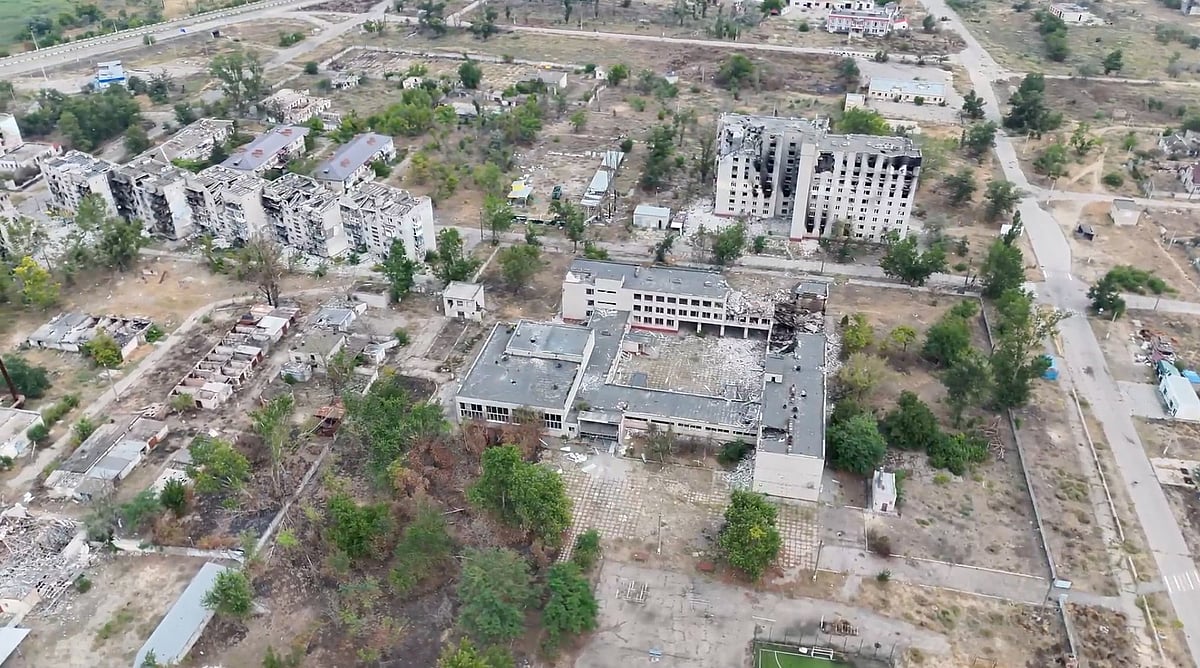
Russia and Ukraine have reached a significant agreement to implement a ceasefire in the Russian-occupied Ukrainian town of Oleshky, effective from October 27. This development, brokered with the assistance of US First Lady Melania Trump, is primarily aimed at facilitating the delivery of essential humanitarian aid and ensuring the safe evacuation of civilians through established humanitarian corridors.
Amidst the ongoing 4.5-year-old conflict, which stands as the deadliest in Europe since World War II, the United States has intensified efforts to organize new peace negotiations. Ukrainian President Volodymyr Zelenskiy confirmed that representatives from Ukraine, Russia, and the United States have agreed to hold technical-level meetings in the first half of November in Abu Dhabi. US officials have indicated that the upcoming talks may take place in either Abu Dhabi or Switzerland, with Zelenskiy expressing hope that these discussions will eventually pave the way for a summit between the leaders of the involved nations.

Previous rounds of peace talks, led by the United States, stalled in February without achieving any substantial progress toward ending the hostilities. The core of the diplomatic impasse remains the conflicting territorial demands; Russia continues to insist on the cession of the entire eastern Donbas region, including areas currently outside its military control. Conversely, Kyiv remains steadfast in its refusal to relinquish any territory currently under its administration.
Recent weeks have seen a noticeable rift between Washington and Kyiv, exacerbated by a series of policy decisions by US President Donald Trump that have been perceived as favoring the Russian position. A significant point of friction has been the restrictions placed on the SpaceX Starlink communication system, which has been vital for Ukrainian military operations and communications. These underlying tensions continue to complicate the broader peace process.
While the ceasefire in Oleshky is viewed as a necessary humanitarian gesture, the path to a comprehensive peace remains fraught with challenges. The upcoming negotiations in Abu Dhabi are widely regarded as a critical juncture. The international community is closely monitoring these developments, hoping that the technical-level talks will provide the necessary momentum to move beyond the current stalemate and address the fundamental issues fueling this protracted war.