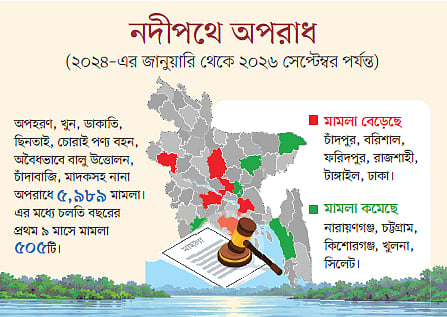
The riverine routes of Bangladesh are increasingly becoming hotspots for piracy, extortion, and various criminal activities. Fishermen are losing their lives to pirate gunfire, while boat workers are being subjected to brutal physical assaults for refusing to pay illegal tolls. Cargo vessels carrying essential goods like fertilizer are frequently looted, and illegal sand extraction has become a rampant issue. Furthermore, the waterways are being exploited for drug trafficking and kidnapping, signaling a severe deterioration in law and order.
Senior officials from the Naval Police indicate that river routes become particularly dangerous after sunset. Passenger trawlers, fishing boats, cargo ships, and bulkheads are regular targets for criminal gangs. The vastness of the river network, combined with limited surveillance compared to land routes, allows criminals to operate with relative impunity. These outlaws are increasingly utilizing the waterways as safe corridors for their illicit activities, creating a climate of fear for traders and the fishing community.

Statistical data highlights the alarming trend of river-based crimes. The Naval Police, which manages security across 11 designated regions, recorded 2,085 cases in 2024 involving murder, robbery, extortion, illegal sand extraction, and arms smuggling. By 2025, this number surged to 3,399, marking an increase of 1,314 cases in just one year. From January to September of the current year, an additional 505 cases of serious crimes, including murder and kidnapping, have been registered. The cumulative total of 5,989 cases over this period underscores the gravity of the situation.
Perhaps most concerning is the fact that law enforcement officers themselves are now being targeted. Naval police personnel frequently face violent resistance during anti-piracy operations. A tragic incident occurred on February 1 last year, when a fisherman named Md. Hossain was killed in the Meghna River near Bhola, with several others injured during a pirate attack. Such incidents demonstrate that criminals are becoming increasingly emboldened.
To restore order, it is imperative to enhance the operational capacity of the Naval Police and strengthen patrol mechanisms. Beyond merely increasing the frequency of patrols, the integration of modern surveillance technology is essential to track and apprehend these criminal syndicates. Without a robust and proactive security strategy, the instability in the waterways will continue to pose a significant threat to the national economy and the safety of those who rely on these rivers for their livelihoods.