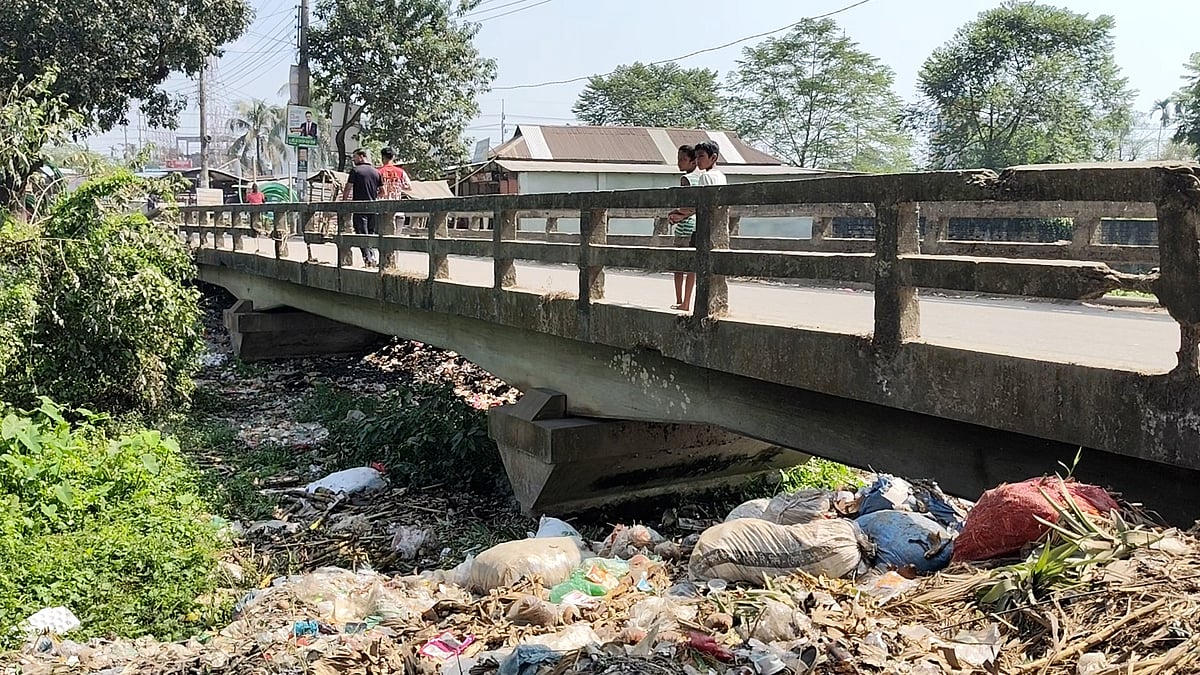
The Churkhai Canal in Mymensingh Sadar, once a vital artery for local agriculture and transportation, is currently facing an existential crisis. Historically, the canal served as a primary waterway for boats and a crucial source of irrigation for farmers in the region. However, due to systemic neglect, rampant encroachment, and the dumping of waste, the canal has effectively ceased to function, with its water flow completely obstructed.
On-site observations reveal that various sections of the canal have been illegally occupied by encroachers. Permanent structures, including residential houses and commercial shops, have been built by filling in parts of the canal bed. Local residents allege that influential individuals have been occupying the land for years, and despite repeated complaints, the local administration has yet to take decisive action to reclaim the public waterway.

Beyond the issue of encroachment, the lack of proper waste management has accelerated the canal's decay. Household waste and refuse from local markets are dumped directly into the canal, leading to severe water pollution and unbearable odors. During the monsoon season, this contaminated water overflows into residential areas, posing significant public health risks. The accumulation of stagnant, polluted water has led to an increase in mosquitoes and other pests, leaving residents vulnerable to waterborne diseases.
Farmers in the region are particularly hard-hit by the loss of this irrigation source. Previously, the canal provided sufficient water for rice and vegetable cultivation; now, the lack of water has severely hampered agricultural productivity. Many farmers have been forced to rely on deep tube wells, which has significantly increased their production costs. The local farming community warns that if the canal is not dredged and cleared of encroachments immediately, the agricultural stability of the area will be permanently compromised.
Environmental activists and local community leaders are calling for urgent intervention from the district administration. They emphasize that simply evicting encroachers is insufficient; the canal must be dredged to restore its natural flow. Furthermore, strict enforcement of waste disposal regulations and public awareness campaigns are essential to prevent further degradation.
While administrative sources indicate that discussions regarding the restoration of the canal are underway, residents remain skeptical and are demanding swift, concrete action. Restoring the Churkhai Canal is not merely an environmental necessity but a critical requirement for the economic survival and well-being of the local population.