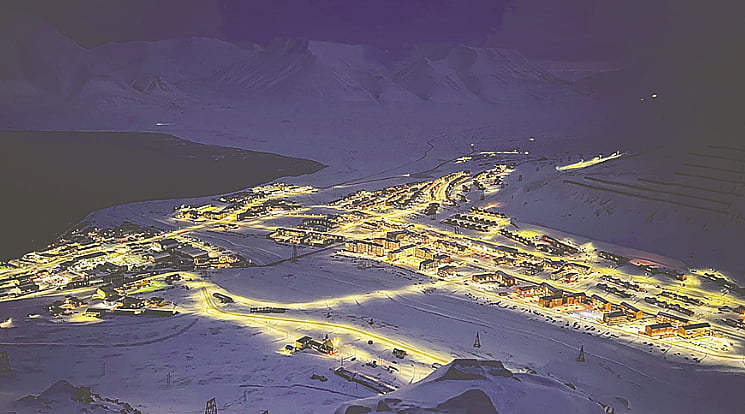
Longyearbyen, a small village in Norway's remote Svalbard archipelago, is facing a severe existential crisis. Located just before the North Pole, it stands as the last permanent civilian settlement in the Arctic. Once immensely popular among adventure-seeking tourists, this northernmost outpost has now become a grim victim of climate change, with temperatures rising at seven times the global average.
Approximately 57 percent of Svalbard's landmass is covered by glaciers. However, due to global warming, the prominent Foxfonna glacier is rapidly melting. Local glaciologist Professor Andy Hodson noted that the glacier is slowly dying, with rainfall increasingly replacing snowfall from the clouds. The ice sheet is thinning by one to four meters annually, serving as an ominous warning sign for the island.

The most critical danger stems from the thawing of permafrost, the permanently frozen layer of subsoil. Subsurface ice melting has triggered landslides, weakened building foundations, and caused walls to crack. With numerous homes already rendered uninhabitable, a severe housing crisis has emerged. Additionally, heavy metals are leaching from bedrock into the drinking water supply, prompting authorities to ban tap water consumption and forcing residents to rely on filtered water from supermarkets.
As temperatures continue to rise, the risk of avalanches in the region has also reached alarming levels. What was once a frozen desert now experiences frequent heavy rainfall. Following a devastating 2015 avalanche that claimed two lives, authorities have constructed snow fences on the mountains and implemented early warning systems to manage future disasters.