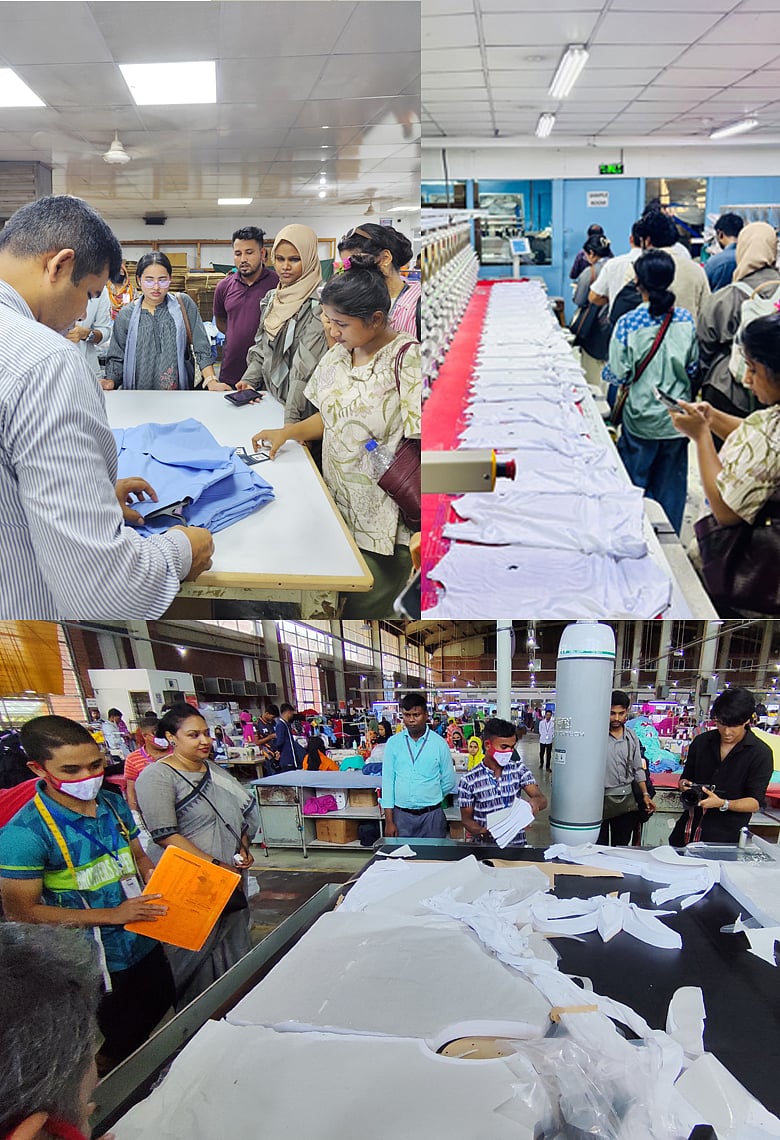
The global textile and apparel industry faces a significant challenge regarding the massive volume of waste generated during production. Addressing this, students from the BGMEA University of Fashion and Technology (BUFT) have embarked on an innovative initiative to transform textile waste into valuable apparel. Recently, the students conducted an extensive field visit to the Giant Group's knitwear factory to observe the production cycle and identify the sources of textile waste firsthand.
The primary objective of this visit was to explore the feasibility of repurposing fabric scraps and cutting waste into new, wearable garments. This initiative is being conducted under the 'Circular Textile Living Lab' project at BUFT. As part of their 'Traditional Crafts in Fashion' course, the students meticulously examined every stage of the manufacturing process, from knitting to the final finishing touches.

During the factory tour, the students engaged in insightful discussions with industry experts. They gained a deeper understanding of how textile waste is generated at various stages of production and how it is currently managed. This practical experience bridged the gap between their theoretical classroom learning and real-world industrial applications. Furthermore, they identified the technical and economic challenges associated with recycling textile waste.
As part of this project, the students are working on a plan to create 32 unique garments, all crafted entirely from factory waste. This initiative not only promotes the concept of sustainable and eco-friendly fashion but also plays a crucial role in shaping the future of the apparel industry. Alongside BUFT, students from the Shanto-Mariam University of Creative Technology are also participating in this process, showcasing a commendable example of inter-institutional collaboration.
Ultimately, this effort to convert textile waste into new clothing signals a positive shift within the Bangladeshi garment sector. The students believe that with the right planning and technological integration, Bangladesh can become a global role model in waste management. Such hands-on learning opportunities are expected to further nurture the students' creativity and prepare them to become skilled, environmentally conscious fashion designers in the future.