


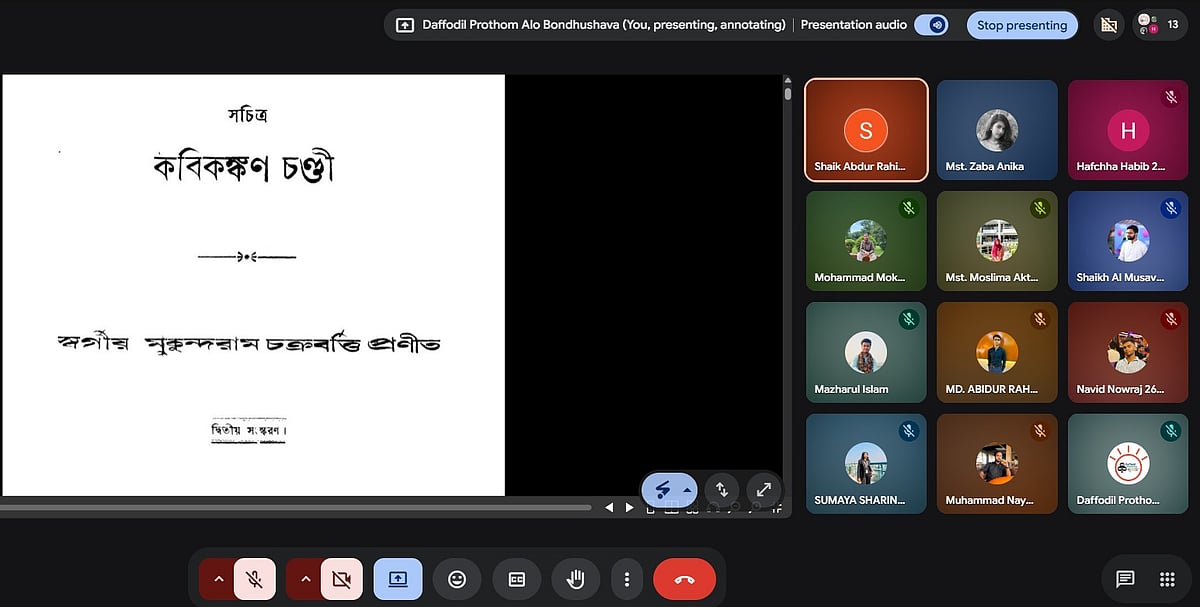
Embracing the festive spirit of Sharadiya Durgotsav, the Daffodil Bondhushava recently hosted an engaging virtual reading circle dedicated to the classical medieval Bengali epic 'Chandimangal'. Held online at 10 PM on October 19, the literary gathering centered around the legendary 'Kalketu and Fullora' episode authored by the pre-eminent medieval poet Kavikankan Mukundaram Chakrabarti. The session provided a deep dive into the literary significance, socio-cultural dimensions, and folk life depicted in the epic during the medieval era.
The event commenced with a detailed narration of the struggles and eventual elevation of Kalketu and Fullora, the central figures of the tale. According to the storyline, due to the divine play of Goddess Chandi, the hunter Kalketu initially fails to find any game in the forest. While returning home empty-handed, he discovers a golden iguana and brings it home. Subsequently, Goddess Chandi reveals her divine form and blesses the destitute couple, triggering a miraculous transformation in their fortune.

Later segments of the discussion highlighted Kalketu's establishment of the prosperous city of Gujarat after clearing dense forests, his assumption of kingship, and the ensuing conflicts with the King of Kalinga. Participants observed how these narratives vividly reflect human perseverance, faith, social hierarchies, and the resilience required to overcome adversities in medieval society.
Despite the linguistic complexities and archaic rhyming structures of medieval literature, members of Daffodil Bondhushava participated with profound enthusiasm. They actively deciphered the complex verses, discussed contextual meanings, and shared their personal perspectives and interpretations, making the intellectual gathering interactive and vibrant.
Concluding the session, club president Musavvir Sakir emphasized the importance of reconnecting with the roots of Bengali literature. He noted that such cultural and literary practices play a vital role in keeping the younger generation anchored to their heritage. The success of this virtual reading circle underscored a growing interest among contemporary youth in exploring classical indigenous literature, paving the way for similar intellectual endeavors in the digital age.


