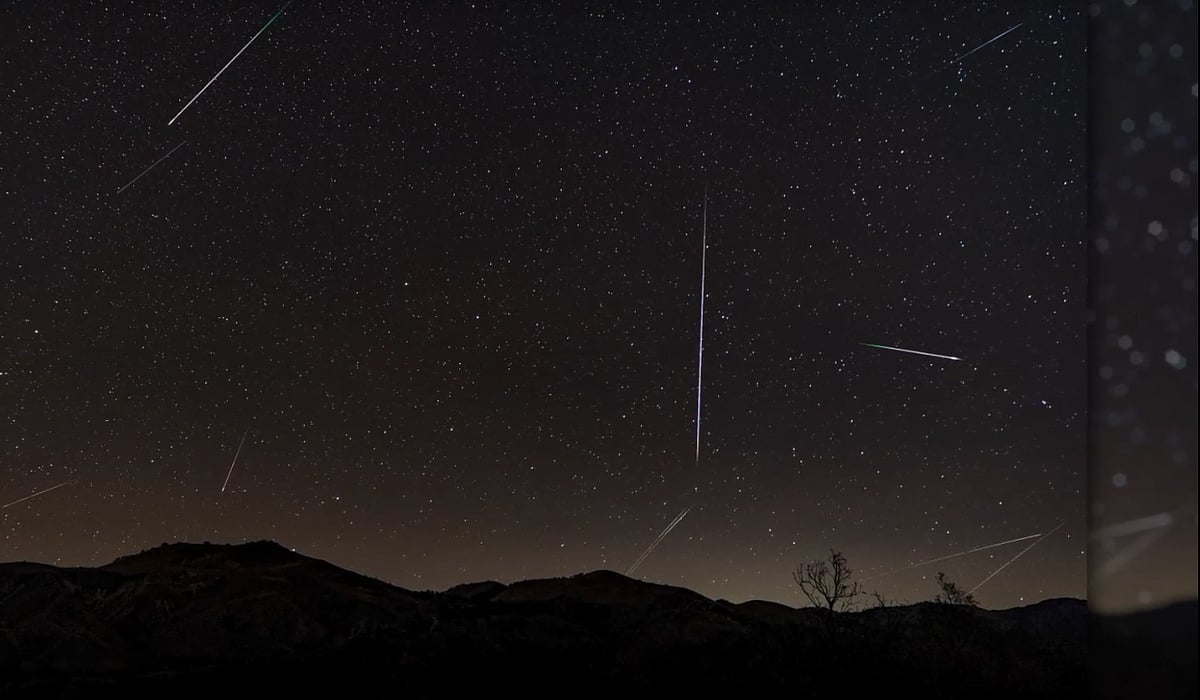
The night sky is set to deliver a breathtaking celestial spectacle as the annual Orionid meteor shower reaches its peak activity. Stargazers around the world, including viewers in the region, are gearing up to witness shooting stars streaking across the atmosphere. This dazzling phenomenon is generated as Earth passes through the trail of cosmic debris and dust left behind by the legendary Halley's Comet during its multi-decade orbit around the sun.
The Orionids, recognized as one of the premier meteor showers of the autumn season, derive their name from the constellation Orion, which serves as the radiant point from where the meteors appear to streak across the cosmos. Halley's Comet completes its majestic orbit roughly once every 76 years, with its next anticipated close approach to Earth scheduled for the year 2061. Until then, the leftover particles from its previous journeys continue to put on a stunning celestial show twice a year, with the Eta Aquariids occurring in May and the Orionids gracing the skies in October.

According to astronomical forecasts, the optimal viewing window for tonight's peak falls between midnight and the pre-dawn hours of Tuesday. Under pristine, dark skies, observers can anticipate catching anywhere from 10 to 20 meteors per hour. However, astronomers note that a roughly 74 percent illuminated gibbous moon may wash out some of the fainter meteors during the earlier parts of the night. Fortunately, as the moon sets or dips lower toward the morning hours, the sky will darken significantly, providing a much clearer canvas for stargazers.
Witnessing the Orionid meteor shower requires no specialized equipment such as telescopes or binoculars; the event is best experienced with the naked eye. Experts recommend heading away from urban light pollution to open spaces where the horizon is wide and unobstructed. Allowing the eyes about 20 to 30 minutes to adjust to the darkness will greatly enhance the visibility of the swift and fiery streaks of light as they burn up in Earth's upper atmosphere.