Leaving the bustling streets of Kuala Lumpur behind, we are now on the road toward Selangor. Our destination is the famous Batu Caves. As the taxi moved northward past the city center, the high-rise buildings gradually gave way to roadside shops, small settlements, and people busy with their daily routines. I always cherish this transitional phase of moving away from familiar urban chaos. While a destination's major sights can be researched in advance, the fleeting glimpses of everyday life framed by a car window are rarely documented in travel guides. Yet, these unscripted street scenes play a vital role in truly understanding an unfamiliar place.
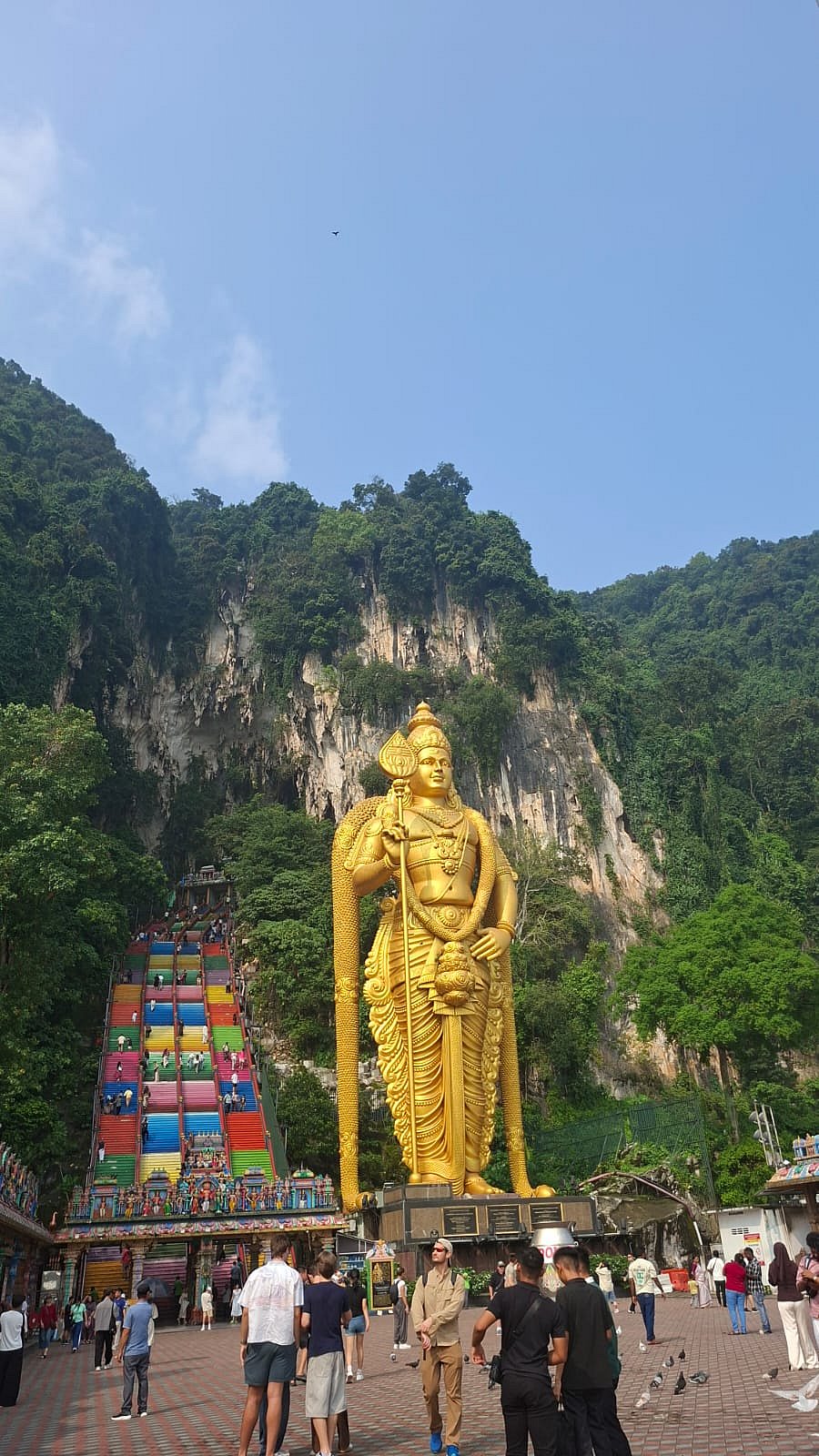
Upon arriving at the Batu Caves, the first thing that commands attention is the towering golden statue of Lord Murugan, set against the backdrop of a majestic limestone hill. Colorful stairs snake up the side of the mountain. Standing before the 42.7-meter-tall monument, one is instantly struck by its sheer magnitude. To reach the main cave temple, visitors must conquer 272 steps.

Climbing the stairs eventually left me breathless. Pausing for a moment, I looked down to see the golden statue shimmering brightly in the sunlight, while streams of visitors steadily ascended the steps. Amidst the human activity, local monkeys and pigeons remained completely unfazed. Some visitors stopped midway to take photographs, while others rested before resuming the climb. Taking a short breather myself, a question naturally came to mind: how did these ancient limestone caves transform into a revered Hindu pilgrimage site?
Lord Murugan is a deeply venerated deity among the Tamil community. In Hindu mythology, he is known as Kartikeya, the son of Shiva and Parvati. The roots of Murugan worship run deep within South Indian Tamil society, holding a profound presence in Tamil literature, folklore, and religious traditions. Armed with a spear and accompanied by his mount, the peacock, this iconic depiction of Murugan is so deeply intertwined with Tamil culture that religious devotion surrounding him continues to thrive across borders.