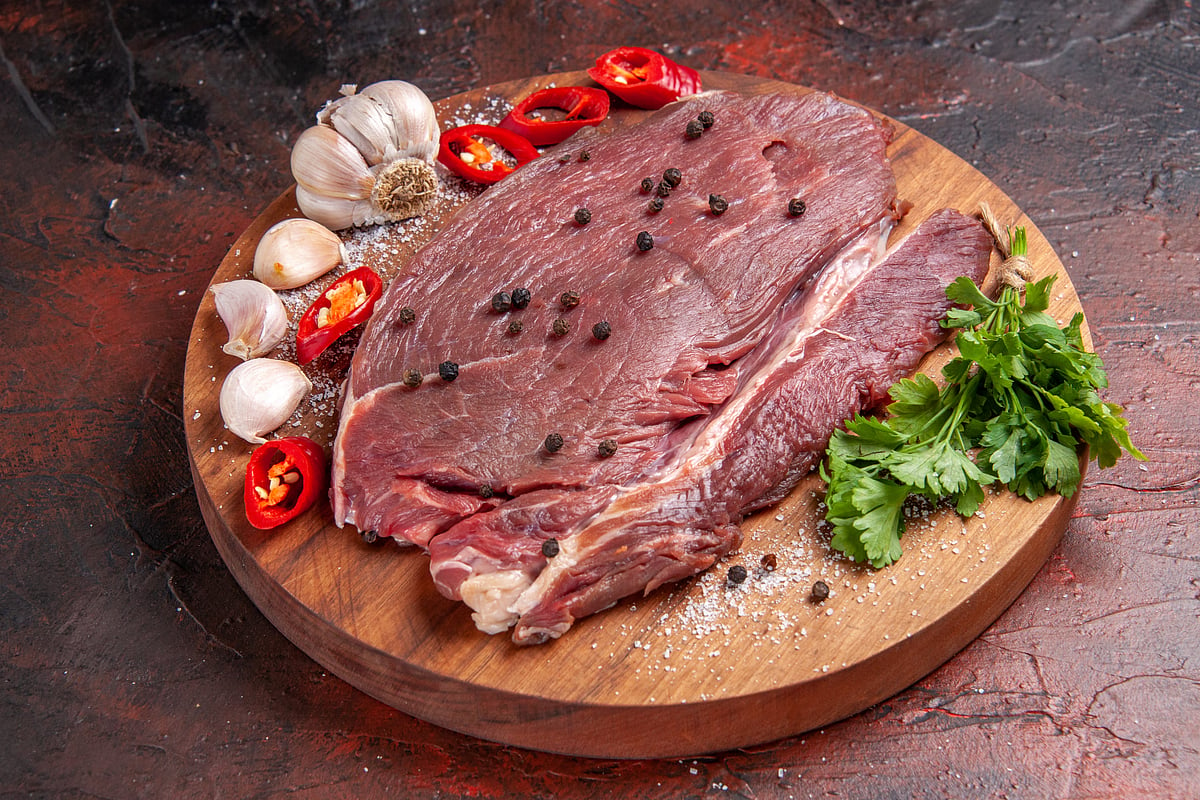
In Islam, the sole authority to determine what is permissible (halal) and forbidden (haram) belongs exclusively to Allah. Cattle are among the animals explicitly permitted for Muslims to consume. However, a widely circulated hadith features the Holy Prophet (PBUH) discouraging the consumption of beef or referring to its meat as a 'disease.' This has led many to wonder: if beef is halal, why did the Prophet (PBUH) make such a statement? An analysis of the matter follows.
Beef is Halal There is not the slightest disagreement among Islamic jurists that consuming beef is completely permissible from a religious standpoint. Cattle are explicitly mentioned in the Quran, notably in the history behind the naming of Surah Al-Baqarah and in discussions regarding sacrificial animals. Furthermore, the Prophet (PBUH) offered cattle as a sacrifice on behalf of his wives during the Farewell Pilgrimage (Sahih Bukhari, Hadith: 1709). Therefore, there is no scope in Islam to consider beef forbidden or haram.

Tradition Regarding Beef Despite the meat being halal, there is a hadith attributed to the Prophet regarding beef, primarily from a health perspective. He stated, 'Drink the milk of cattle and use its butter (ghee), for its milk contains a remedy and its butter contains a cure. However, abstain from its meat, for its meat contains a disease' (Al-Mustadrak alas-Sahihayn, Hadith: 8225).
Islamic Perspective on Food Safety Scholars such as Imam Tirmidhi noted that harmful elements present in certain plants tend to accumulate more densely in the flesh of animals, which can be detrimental to the human body. Conversely, when the extracts and nutrients of those same plants are filtered and transformed into milk or ghee, they become significantly more nutritious, pure, and beneficial for human health.
While classical hadith scholars held varying opinions regarding the authenticity and chain of transmission (sanad) of this specific narration, many prominent scholars, including Nasiruddin al-Albani, have accepted it as authentic.