In the modern era, Artificial Intelligence (AI) has permeated almost every sector, but its application in the sensitive field of healthcare warrants serious scrutiny. A study published in the medical journal BMJ Open this April tested five popular chatbots with various health-related queries. The results were alarming: nearly half of the responses were problematic, and approximately 20 percent were critically inaccurate. This technological limitation poses significant risks to public health.
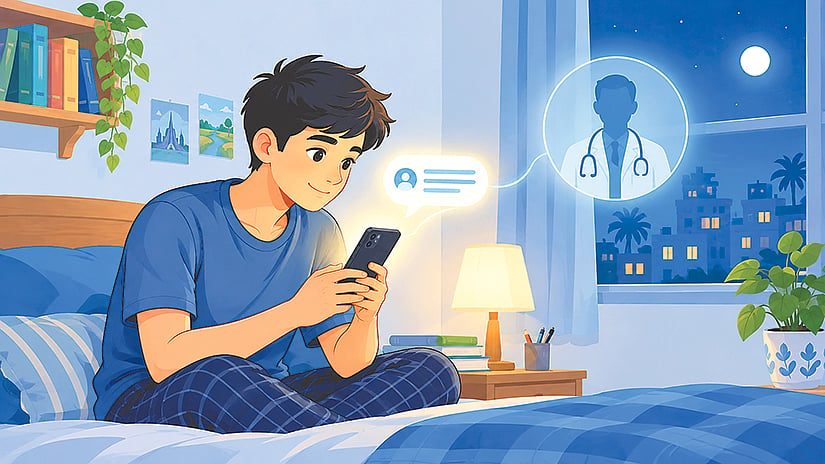
Consider a scenario where an individual experiences chest pain in the middle of the night. Instead of seeking professional medical help, they consult an AI chatbot. The bot might dismiss the symptom as mere acidity. Relying on this flawed advice, the patient might choose to sleep, potentially ignoring a life-threatening cardiac event. Doctors emphasize that chest pain should never be ignored, as it could indicate serious underlying conditions. Since AI cannot physically examine a patient, it relies solely on probabilistic data, which often leads to erroneous conclusions.

Research from Oxford University further highlights these limitations, showing that individuals were able to correctly identify their health issues using chatbots in only about one-third of cases. The primary reason is that AI lacks access to a patient's medical history, vital signs, or clinical examination data. It is merely a mathematical synthesis of internet-based information. Consequently, relying on AI for diagnosis is a gamble with one's health.
However, this does not mean AI has no utility in healthcare. It can be used to gain a general understanding of diseases or medications. It can also assist in preparing a list of questions to ask a doctor during a consultation. Nevertheless, when faced with emergency symptoms such as chest pain, shortness of breath, or high fever, one should not wait for technological advice but seek immediate professional medical attention.
Ultimately, the question is not whether AI is good or bad, but where we should place our trust. Technology can serve as a tool, but it can never replace a qualified physician. Awareness and timely decision-making remain the cornerstones of maintaining good health.