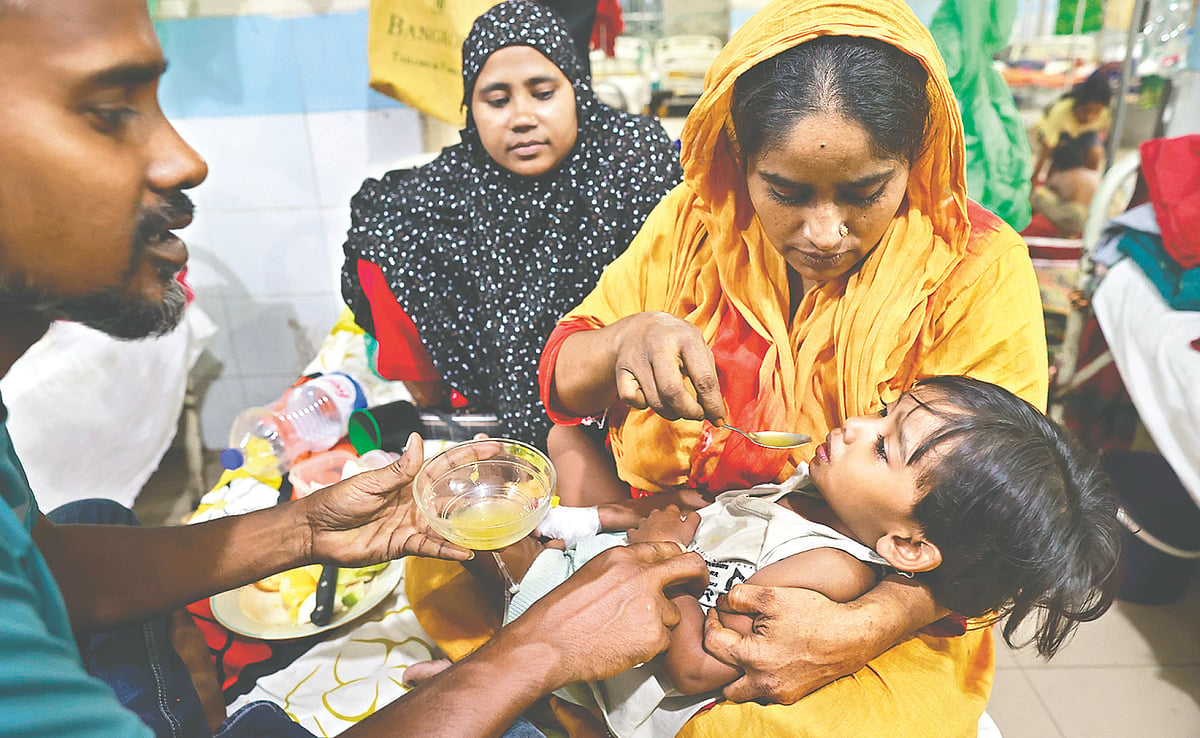
Dengue fever has taken an alarming turn in the coastal regions of Bangladesh, expanding far beyond its traditional urban epicenters. While the disease was once primarily concentrated in the capital city, it has now permeated nationwide, with the coastal belt bearing a disproportionately heavy burden. Facilities such as the Mongla Upazila Health Complex in Bagerhat are currently overwhelmed with unprecedented numbers of patients, reflecting a crisis that health officials warn extends far beyond official hospital admission statistics.
Recent data indicates that nearly 40 percent of all dengue patients admitted to hospitals across Bangladesh this year hail from 19 coastal districts. This marks a historic high, as no previous period since the re-emergence of dengue in the country in 2000 has witnessed such a massive concentration of cases in coastal zones. Despite the severity of the outbreak, the government has not yet issued any specific explanation or unveiled targeted interventions tailored specifically to these vulnerable regions.

Public health experts, entomologists, and researchers have pointed to several underlying factors driving the outbreak in the coastal belt. These include the classification of coastal areas as relatively new transmission zones—often referred to in epidemiology as 'virgin areas'—where populations may lack acquired immunity. Furthermore, severe shortages of safe drinking water force residents to store water in containers that become ideal breeding grounds for Aedes mosquitoes. Poor sanitation, persistent waterlogging, and the absence of elected local government representatives to oversee civic maintenance have further compounded the crisis.
Experts emphasize that the geographic and climatic conditions of coastal areas, combined with inadequate vector control measures, create a compounding threat. Local health administrations have largely failed to launch robust larval eradication campaigns or community-wide sanitation drives commensurate with the scale of the epidemic. Without immediate, specialized intervention, the situation in the southern coastal belt risks deteriorating further, posing a severe threat to public health and local healthcare infrastructure.