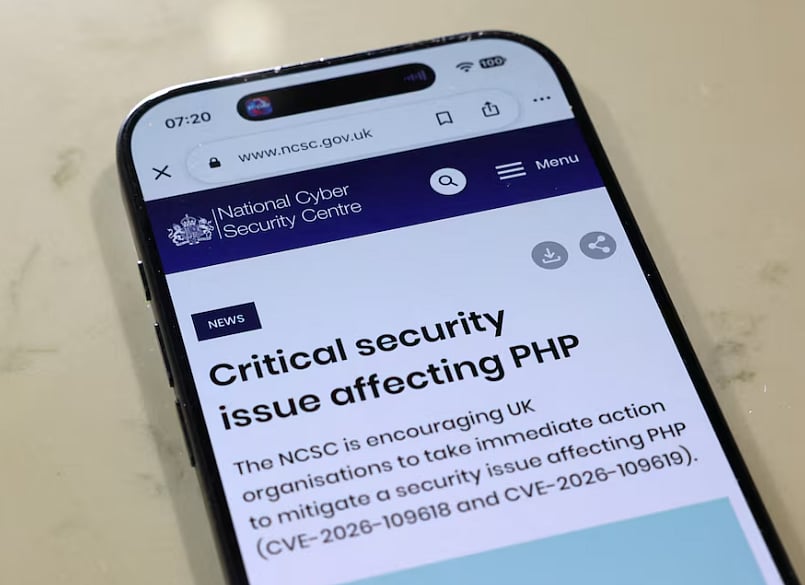
A severe security vulnerability discovered in PHP, one of the world's most widely used programming languages for web development and management, has triggered a massive global scramble. Governments and major technology companies across the globe are working around the clock to patch the flaw, while cybersecurity firms have reported millions of cyber attack attempts targeting vulnerable systems since the vulnerability was made public.
Earlier in the week, governments across Europe and other regions proactively shut down numerous websites as a precautionary measure. Simultaneously, system operators raced to apply emergency patches. From Tokyo to Helsinki, temporary suspensions of banking services, airlines, railways, tax portals, and various public services underscored how deeply embedded PHP is within both governmental and private digital infrastructures. The incident also highlighted the immense operational challenges involved in swiftly remediating core architectural flaws on a global scale.

Speaking at an event in Cologne, Germany, Microsoft CEO Satya Nadella remarked that it had been an extremely long and arduous day and night for everyone in the IT and security sectors, noting that he had not witnessed a crisis of this scale in quite some time. He emphasized that the incident starkly illustrates the critical importance of building digital systems that can be maintained securely over time. The underlying vulnerabilities in PHP had persisted for years before being recently uncovered through the use of advanced artificial intelligence tools.
Responding rapidly to the crisis, PHP maintainers released an emergency patch on Wednesday, urging all users to update their software immediately. However, cybersecurity experts noted that the technical details of the flaws leaked or became public before the patches could be universally applied, creating a window of vulnerability exploited by malicious actors. Madeleine Lawrence, co-founder of Belgium-based cybersecurity firm Aikido Security, confirmed that malicious scanning and exploitation attempts surged dramatically almost as soon as the vulnerability details emerged.
This global cyber scare has prompted a reassessment of cybersecurity protocols and maintenance pipelines across industries. Major tech enterprises and financial institutions are now re-evaluating their dependency management and automated vulnerability detection frameworks to prevent similar crises in the future. As web administrators continue to upgrade systems and monitor server logs for suspicious activity, the incident serves as a stark reminder of the fragile nature of modern web architecture and the persistent threat landscape facing digital public services.