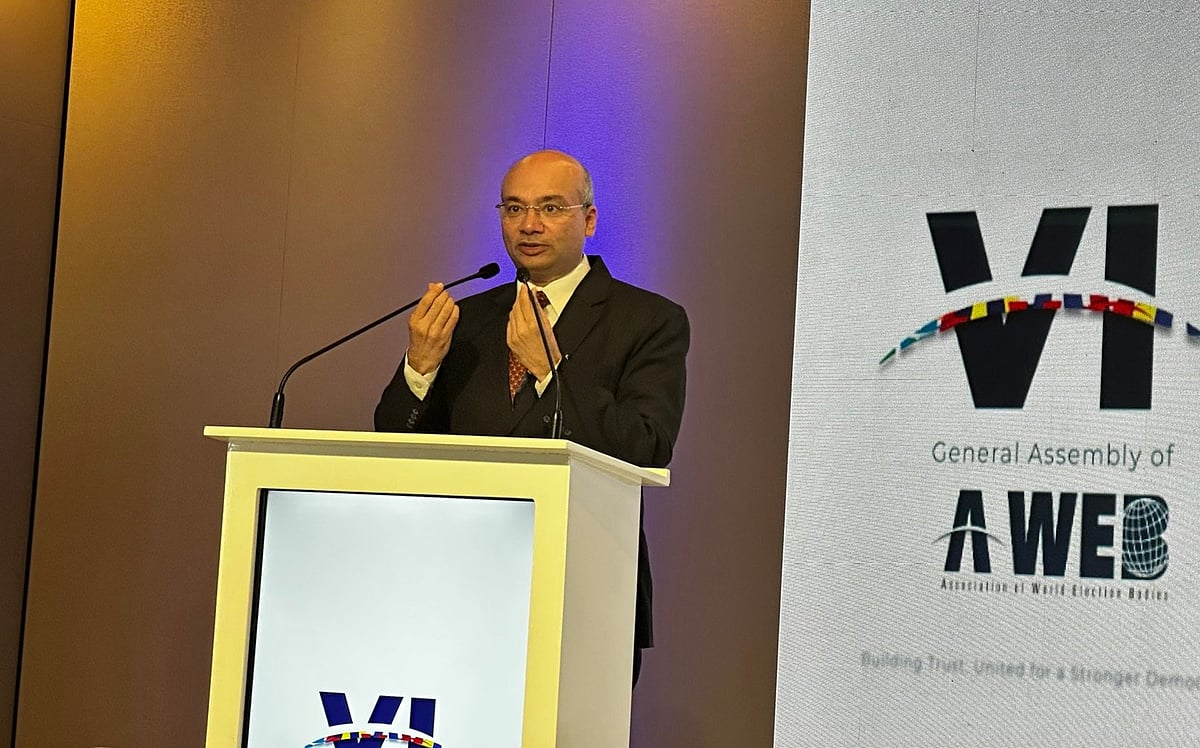
A significant administrative controversy has emerged within the Election Commission of India, centering on the conduct of Senior Deputy Election Commissioner Manish Garg. Documents obtained through the Right to Information (RTI) Act have revealed that two Election Commissioners, Sukhbir Singh Sandhu and Vivek Joshi, had formally raised concerns regarding Garg’s unilateral decision-making and professional conduct. These grievances were communicated to the Cabinet Secretariat in late July, highlighting a deep-seated rift within the commission's top brass.
According to the RTI disclosures, the two commissioners submitted separate letters to Cabinet Secretary TV Somanathan on July 29. The records confirm that the Cabinet Secretary acknowledged receipt of these communications and subsequently forwarded copies to Chief Election Commissioner (CEC) Gyanesh Kumar. This indicates that the highest levels of both the administrative bureaucracy and the election body were fully aware of the internal dissent.

Despite the gravity of the allegations, no disciplinary action or formal inquiry was initiated. The Cabinet Secretariat defended its inaction by stating that the letters were not sent on behalf of the Election Commission as an institution, but rather represented the individual grievances of the two commissioners. The Secretariat argued that intervening in the internal affairs of the commission without a formal institutional mandate would be inappropriate, thereby effectively shelving the complaints.
This incident has sparked a broader debate regarding the transparency and accountability of the Election Commission. The information, brought to light by activist Commodore Lokesh K. Batra, underscores a concerning lack of internal resolution mechanisms. Analysts suggest that when such high-level disputes remain unaddressed, it undermines the perceived neutrality and operational integrity of the constitutional body.
The continued silence of CEC Gyanesh Kumar and the inaction of the Cabinet Secretariat have drawn sharp criticism. As the commission navigates these internal challenges, the lack of a robust response mechanism raises questions about how the government intends to handle future administrative conflicts within independent constitutional institutions. The situation remains a point of contention, highlighting the need for clearer protocols in managing internal governance at the highest levels of the state.