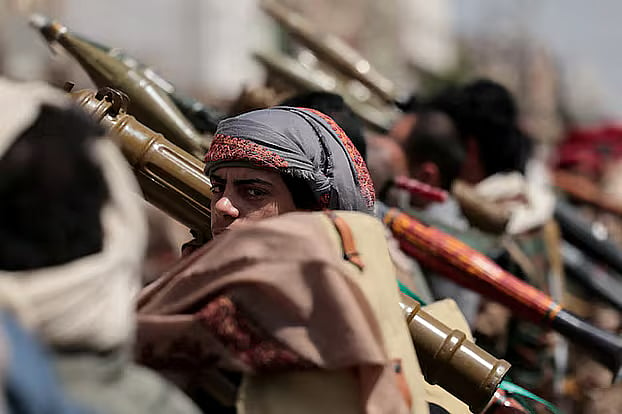
The Iran-backed Houthi rebels in Yemen have shifted their strategy against Saudi Arabia, moving beyond conventional drone and missile strikes to engage in a sophisticated psychological and propaganda war. By leveraging social media platforms, the group is attempting to tarnish the reputation of the Saudi leadership by associating them with the late American sex offender Jeffrey Epstein.
At the heart of this campaign is a baseless and inflammatory narrative. The Houthis are circulating claims that individuals linked to the Saudi royal family allegedly sent the Kiswa—the cloth covering the Holy Kaaba—to Epstein’s private island. This narrative is clearly designed to exploit religious sentiments across the Muslim world. Jeffrey Epstein, who was awaiting trial on charges of sex trafficking minors, died in a New York prison in 2019, a death officially ruled as suicide.

Mahdi al-Mashat, the Houthi president, has been at the forefront of this rhetoric, accusing those who allegedly provided the Kiswa to Epstein of targeting the sanctity of Mecca. Saudi authorities have maintained a dignified silence, choosing not to respond to these unsubstantiated allegations. Observers suggest that this is a calculated attempt by the Houthi leadership to undermine Saudi Arabia's standing as the custodian of the Two Holy Mosques.
This propaganda push follows a period of heightened tension, during which Saudi Arabia accused the Houthis of launching drone attacks aimed at the holy city of Mecca. Riyadh condemned these actions as a deliberate provocation against the global Muslim community. The Houthis, while denying those specific military allegations, have countered by accusing the Saudi state of engaging in their own form of psychological warfare.
The Houthi propaganda network is currently utilizing various digital influencers and comedians to amplify these claims. With hundreds of thousands of followers on platforms like X (formerly Twitter), these narratives are being disseminated rapidly to shape public opinion. This shift toward digital disinformation marks a new phase in the ongoing conflict, where the battle for perception is becoming as critical as the battle on the ground.
International analysts remain concerned that the weaponization of religious symbols for political gain could further destabilize the region. As the Houthis continue to employ these tactics, the focus remains on how Saudi Arabia and its allies will navigate this complex information warfare while maintaining their regional security objectives.