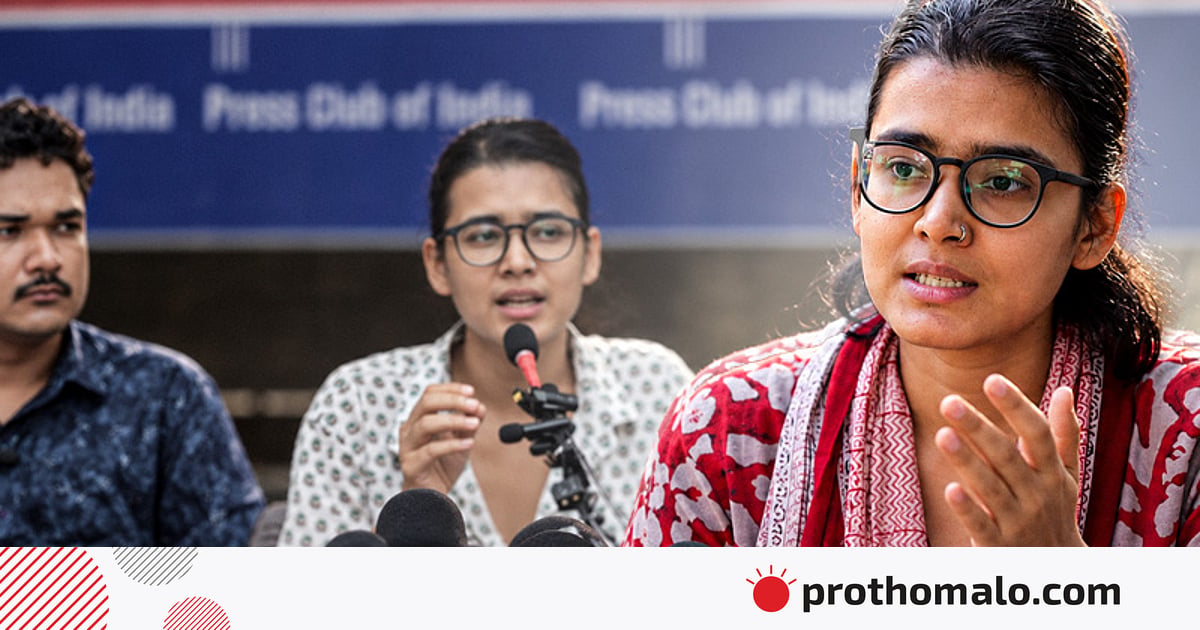
A video message by Indian left-wing student leader Neha Bora regarding the historic mass uprising in Bangladesh recently went viral on social media, triggering widespread discussions and debates across borders. In her initial remarks, she expressed deep admiration for the courage and struggle of Bangladeshi youth. However, the video's rapid circulation was soon followed by misleading interpretations and aggressive propaganda by various political factions and media outlets in both India and Bangladesh.
As the controversy escalated, Neha Bora released another video statement to set the record straight and counter the malicious propaganda. She pointed out that her original words were deliberately distorted and spliced into thousands of different versions across social media platforms. According to her, the vital context—including the audience she was addressing and the true nature of her solidarity—was systematically omitted, with even the identifying symbols at the top of the video being cropped out.

Political analysts believe that Neha's clarification goes beyond merely defending her personal stance; it sheds light on the partisan agendas and media manipulation prevalent on both sides of the border. Right-wing factions and partisan media outlets attempted to paint her message with a different brush to suit their domestic political narratives, aiming to cast doubt on cross-border youth solidarity and progressive democratic struggles.
This unfolding episode highlights the complex dynamics of regional politics and digital misinformation. While certain quarters sought to exploit the edited footage to fuel religious division and political apprehension, Neha's resolute response serves as a powerful reminder of the resilience needed against state and media-driven narratives. Observers note that such transnational youth solidarity and transparent communication are crucial for overcoming regional prejudices and fostering genuine mutual understanding.
Moving forward, media experts emphasize the urgent need for digital literacy and critical thinking among the youth to counter manipulated content and deep-seated political propaganda. Neha Bora's proactive stance stands as a significant case study in how targeted disinformation campaigns can be effectively challenged through timely clarification and unwavering commitment to truth.