The geopolitical standoff in the Middle East has escalated sharply as Israeli Prime Minister Benjamin Netanyahu declared the ouster of the Iranian government as a primary national objective. With national elections approaching in Israel and opinion polls showing a dip in his public support, analysts suggest that Netanyahu's aggressive rhetoric may be driven by domestic political calculations. However, military experts and regional observers are deeply skeptical about whether Israel possesses the unilateral strategy and capability to achieve regime change in Tehran without extensive U.S. military backing.
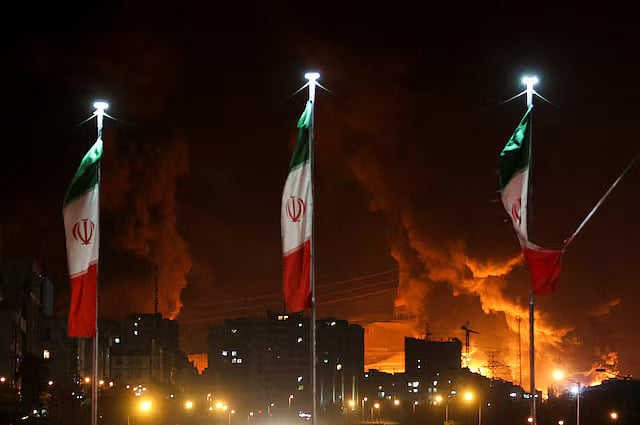
Iran has previously demonstrated its resilience by successfully absorbing and surviving two major waves of attacks while retaining substantial retaliatory capabilities. Beyond defending its own borders, Tehran maintains the strategic capacity to target neighboring Gulf states where various American military installations are stationed. This regional footprint means any unilateral Israeli escalation could quickly engulf the wider Middle East in a devastating multi-front conflict, threatening global energy supplies and international security.

From a purely military standpoint, while the Israeli Air Force is capable of inflicting significant infrastructure damage within Iran, military analysts emphasize that air strikes alone cannot dismantle a deeply entrenched government. Launching a ground invasion against Iran would require massive military mobilization, logistical depth, and resources that exceed Israel's standalone capacity. Furthermore, many of Iran's critical military and strategic assets are heavily fortified deep beneath mountain ranges. Penetrating these underground bunkers requires specialized heavy ordnance and bunker-buster technology that primarily belongs to the United States arsenal rather than Israel's.
The diplomatic dimension remains critical as the U.S. factor looms large over these developments. Recently, Israeli leadership held high-level discussions with U.S. President Donald Trump, followed closely by a strategic visit to Israel by the U.S. Secretary of Defense Pete Hegseth. Although Netanyahu raised the stakes regarding Iranian leadership immediately following these talks, it remains entirely ambiguous whether Washington has agreed to participate in a fresh military campaign or lend direct combat support to a regime-change operation.
Ultimately, experts conclude that without explicit, boots-on-the-ground or material backing from Washington, an isolated Israeli military campaign against deeply entrenched Iranian targets carries prohibitive risks. As regional tensions continue to boil, the international community watches closely to see whether diplomatic channels can temper the rhetoric or if the Middle East is heading toward an unprecedented military confrontation.