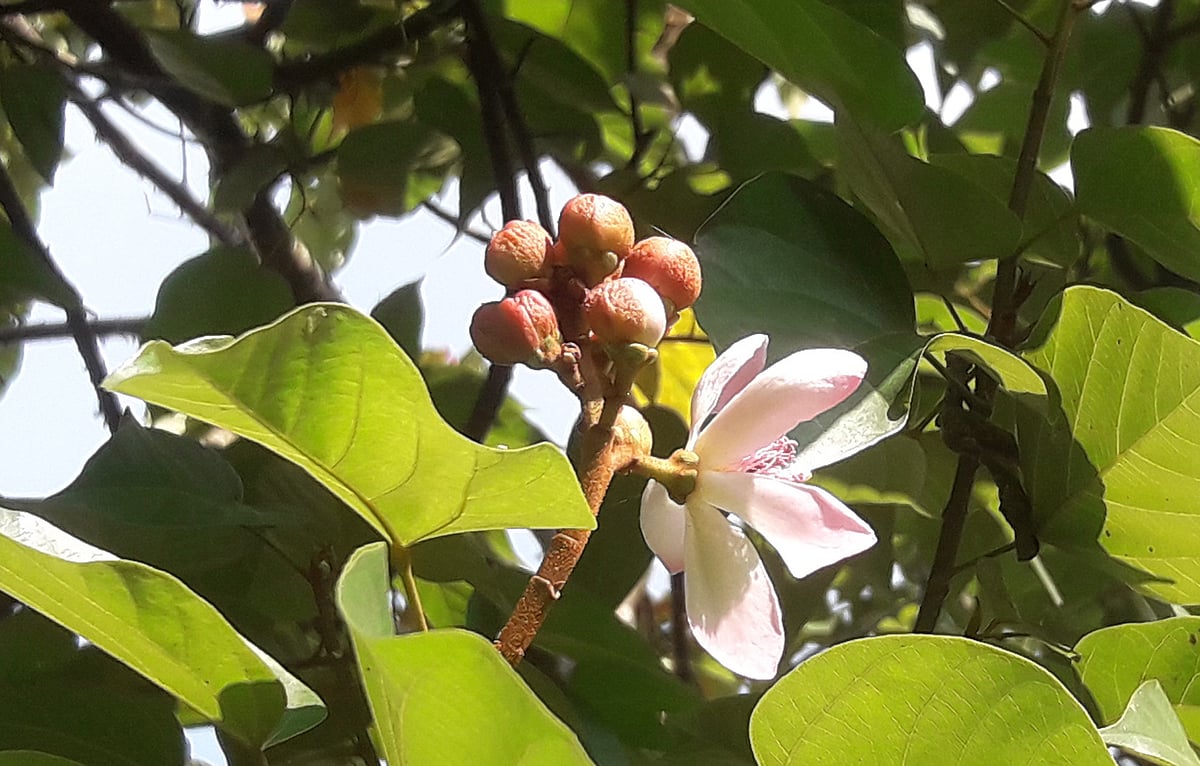
A rare botanical specimen has captured the attention of nature enthusiasts at the regional office premises of the Wildlife Management and Nature Conservation Department near the Barshijora Eco-park in Moulvibazar suburb. The unique plant, scientifically known as Bixa orellana, has blossomed with delicate pink and white flowers alongside clusters of reddish, soft-spiked fruits glistening under the afternoon sun.
According to officials, the tree was first spotted at the office premises several years ago when it was laden solely with fruits. Recently, wildlife and biodiversity conservation officials noted a fresh cycle of blooming after a period of dormancy, prompting a closer observation of the plant's seasonal transformation. A metal nameplate affixed near the base of the trunk identifies its rare species and scientific nomenclature.

Botanical history indicates that this shrub-like plant is native to the American continents. It was introduced to Southeast Asia during the seventeenth century through Spanish explorers and traders. Over time, the plant has acquired various vernacular names across different regions, including Doigota, Lotkongota, Sinduriful, and Saffron flower, although it bears no botanical relation to true saffron.
Globally, the plant is widely celebrated as the 'lipstick tree' due to the reddish-orange pigment extracted from its seeds, which has historically been utilized for natural coloring and cosmetics. The presence of this exotic and culturally rich tree within a government conservation office in Moulvibazar underscores the region's diverse ecological landscape and adds significant educational value for visitors and researchers alike.