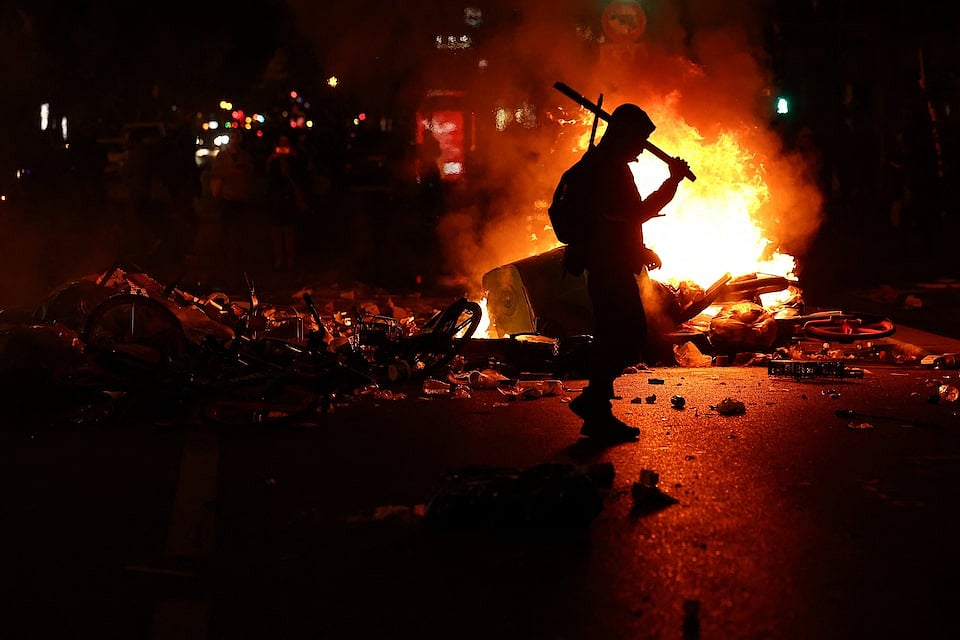
A wave of intense public protests has swept across several European nations, fueled by skyrocketing commodity and fuel prices, deteriorating public services, and a severe housing crisis. France has emerged as the epicenter of the unrest, prompting the government to impose partial curfews in northern cities including Lille, running from evening until morning hours to curb ongoing violence.
Last Saturday, approximately half a million people took to the streets across France. While initial gatherings were largely peaceful, demonstrations quickly turned volatile in many areas. Rioters set fire to government buildings, vandalized shops, and engaged in widespread looting. Streets were left littered with debris, smoke, and shattered glass. Authorities reported that over 2,500 people were arrested in connection with the weekend riots, while nearly 1,000 security personnel sustained injuries. In one severe incident, a protester reportedly lost a hand due to a police crowd-control grenade.

According to trade associations, the total number of damaged businesses has surpassed 3,000, with economic losses projected to reach hundreds of millions of euros. In the capital city of Paris alone, between 300 and 400 upscale commercial establishments suffered structural and window damage. Security forces, deployed heavily around key areas such as the Place de la Republic in Paris, frequently clashed with demonstrators who retaliated by kicking away tear gas canisters.
Beyond France, social unrest has manifested in neighboring European states. In Italy, Milan witnessed violent clashes between police and protesters over the weekend. Meanwhile, citizens in Spain and Portugal have resorted to pitching tents in public spaces to protest soaring rental costs and a deepening housing shortage. Similar violent protests have also been reported in Belgium and Albania, reflecting a broader regional discontent.
Analysts note that unless governments address the root causes—namely inflation, cost of living, and housing affordability—the unrest could persist and intensify. While authorities continue to prioritize law enforcement and curfews, the heavy-handed response risks further alienating the public and deepening political instability across the continent.