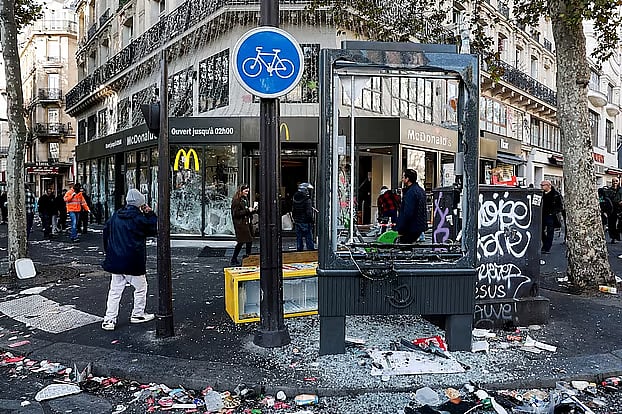
France is currently enduring one of the most turbulent periods in its recent history. Intense demonstrations have swept through the capital, Paris, and various other cities. What began as street protests quickly escalated beyond rallies and marches, plunging into violent clashes with the police and widespread looting, prompting authorities to impose curfews in multiple cities.
The protests initially ignited among high school students, who took to the streets to voice grievances over rising education costs and inadequate infrastructure. Ordinary citizens soon joined the movement, fueling a weekend of nationwide upheaval driven by demands to combat the soaring cost of living and secure adequate state funding for public services.

Marking some of the most severe violence in France's recent history, the unrest saw the historic city hall in Limoges torched, while over 3,000 retail shops were looted. Although the imposition of curfews has brought a tense and fragile calm to the streets, the threat of further danger is far from over.
In the wake of the chaos, mayors of the affected cities have demanded accountability from the French government, citing a lack of preparedness. In response, the government has begun implementing various measures to bolster security and provide assistance to damaged businesses.
While curfews have brought a degree of control to the streets, some demonstrators have already called for renewed protests on Saturday, October 24. Furthermore, labor unions have announced plans for a nationwide strike on November 5 to protest budget cuts and demand higher wages.
Addressing the Aftermath
During the violent weekend protests across the country, police detained approximately 2,400 individuals. Investigators are currently scrutinizing viral videos and photographs circulating online to identify and track down those involved in the widespread looting. The French government has assured that on-the-ground measures are being intensified as the nation struggles to heal from the unprecedented unrest.