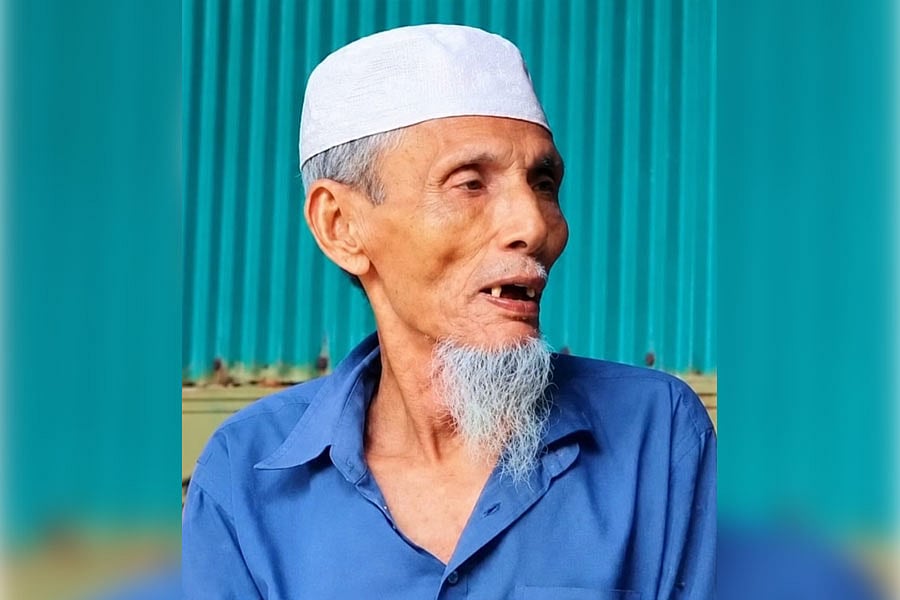
The aftermath of the shocking obstruction and desecration surrounding the burial of freedom fighter Manik Pashari in Chitlia village of Pirojpur continues to haunt his family and local residents. Relatives of the deceased war hero are grappling with profound fear and insecurity as the initial police presence has receded, leaving their homestead deserted and vulnerable. The unprecedented incident, which saw a freedom fighter's funeral disrupted and his grave filled with dirt, has left the community in deep shock.
According to local residents and family members, nothing of this magnitude had ever occurred in the village before. On Saturday morning, following Manik Pashari's death at his daughter's residence in Gopalganj, his body was brought to Pirojpur. However, preparations for his funeral were aggressively halted under the leadership of local activists affiliated with Jamaat-e-Islami and Chhatra Shibir. The agitators not only obstructed the funeral prayers but also filled the freshly dug grave with soil, threatened to burn the body, and intimidated individuals involved in digging the grave with false legal cases.

Faced with escalating tensions and the imminent threat of violence, district police administration intervened late Saturday night. Pirojpur Superintendent of Police Mohammad Talebur Rahman had stated that strategic measures were adopted to ensure safety, ultimately moving the body inside the police lines to perform the funeral prayers and accord a state guard of honor. Despite these emergency interventions, the lack of continued police protection around the family home has left the surviving relatives in a state of acute vulnerability and distress.
This hostile reaction is deeply rooted in historical political tensions. Manik Pashari was the primary plaintiff in a war crimes case filed at the Pirojpur Sadar Police Station on August 12, 2009, against former Jamaat-e-Islami nayeb-e-amir and lawmaker Delwar Hossain Sayeedi. Pashari had courageously testified against Sayeedi during the proceedings at the International Crimes Tribunal. Local observers strongly believe that this historic judicial role and long-standing political animosity served as the primary catalyst for the disgraceful treatment meted out to the war hero even in his death.
The conscious citizens and local community leaders have expressed outrage over the incident, asserting that those who fought for the independence of the nation deserve utmost dignity in life and death. As the family continues to mourn under the shadow of fear, civil society members are demanding immediate, impartial investigations, stringent legal actions against all perpetrators involved in the disruption, and round-the-clock security for the grieving household.