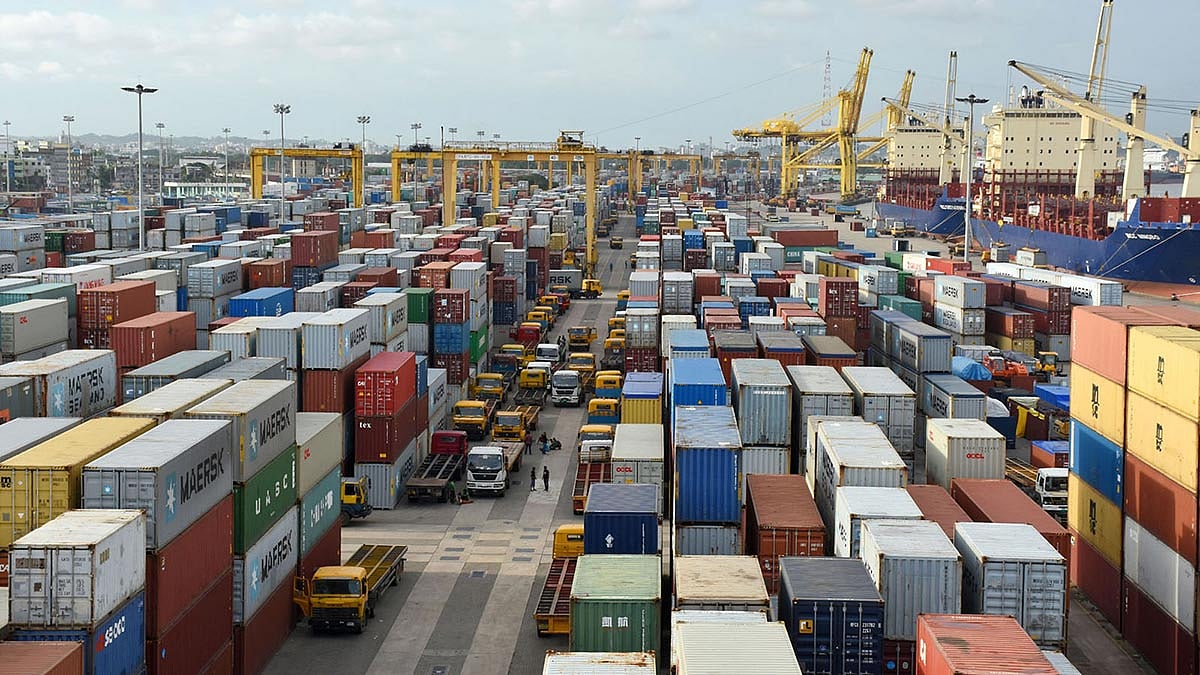
The twin maritime gateways of Bangladesh, Chattogram and Mongla ports, are facing a severe existential threat due to the adverse impacts of climate change. A recent report by the Asian Development Bank (ADB), titled 'Asia Pacific Climate: Planning for a Resilient Future,' highlights that rising sea levels, frequent storm surges, and intensified cyclones are projected to cause an annual financial loss of approximately 16.8 billion BDT for these two ports. Over the next century, the cumulative economic impact is estimated to reach 13.6 billion USD, equivalent to over 168,000 crore BDT.
The report underscores that climate-induced natural disasters will not only damage port infrastructure but also severely impair operational efficiency. Disruptions to daily port activities will inevitably ripple through the national economy, hindering import-export trade and supply chain logistics. Among South Asian nations, Bangladesh ranks third in terms of port vulnerability to climate change.

India tops the list of countries at risk, with projected losses for its ports estimated at 254 billion USD, followed by Pakistan with 38 billion USD. Bangladesh follows in the third position, while Sri Lanka ranks fourth with an estimated loss of 6.15 billion USD. The Maldives, at the bottom of the list, faces an estimated loss of 120 million USD.
Professor A.K.M. Saiful Islam of the Institute of Water and Flood Management at the Bangladesh University of Engineering and Technology (BUET) describes the situation as a dual crisis. He points out that the country is grappling with both land subsidence and rising sea levels. Given Bangladesh's unique geography as a deltaic nation with low elevation, the vulnerability to sea-level rise is significantly higher compared to other regions.
Experts emphasize that the protection of the 162 polders along the coastline is now a critical necessity. Addressing these climate challenges requires immediate investment in resilient port infrastructure and sustainable coastal management. The ADB report stresses the urgent need for a comprehensive action plan to ensure a resilient future, enabling the ports to maintain operations while safeguarding long-term economic stability.
Ultimately, the climate threat to these ports is not merely an environmental concern but a matter of national economic security. As the primary hubs for Bangladesh's international trade, protecting Chattogram and Mongla ports is essential. Without proactive and integrated measures, the nation risks facing a massive economic downturn that could stifle growth for generations to come.