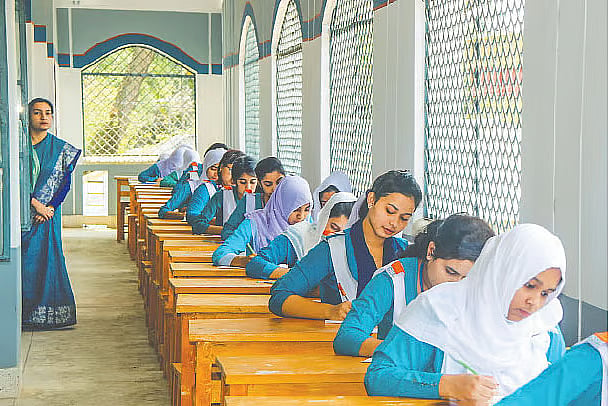

Walking into many private schools and colleges in Dhaka and various urban centers across Bangladesh, one frequently encounters a common policy inscribed in admission logs: an unexcused absence incurs a fine ranging from Tk 50 to Tk 100 or even higher. On paper, the logic seems straightforward—making truancy costly enough to deter absenteeism and encourage regular class attendance. However, in practice, this represents one of the least scrutinized and most questionable administrative policies within the country's educational framework. It prompts a fundamental question: do these financial penalties genuinely serve the true purpose of education?
At first glance, such measures appear reasonable, given that regular attendance is undeniably vital for academic progress. It ostensibly prompts parents to ensure their children remain engaged in school routines. While this practice was once primarily confined to capital and metropolitan institutions, it has gradually permeated smaller towns and rural educational hubs. Yet, when evaluated through the lens of socioeconomic disparity, child rights, and the core principle of equality, the fairness of this policy becomes increasingly complex and contentious.

A fixed monetary penalty of fifty or one hundred taka may seem negligible to affluent households; however, the economic weight of such a fine is far from uniform. For a lower-middle-class or economically vulnerable family, accumulated penalties resulting from consecutive days of absence can transform into a significant financial strain. Consequently, a policy ostensibly applied equally to all students routinely generates deeply unequal outcomes, disproportionately penalizing those with limited financial resilience.
Consider instances where students miss classes due to unavoidable health challenges or biological realities, such as severe menstrual complications among adolescent girls. Punishing them financially for circumstances beyond their control creates an exclusionary environment. Rather than fostering a passion for learning, punitive measures risk inducing anxiety, alienation, and a general aversion towards the academic institution. True engagement cannot be coerced through fines or economic threats.
Educational experts consistently argue that improving attendance requires enhancing classroom engagement, fostering inclusive environments, and addressing the root causes of absenteeism rather than relying on punitive measures. Schools must evolve into spaces where students are intrinsically motivated to attend, driven by inspiring pedagogy rather than the fear of financial penalty. Punitive enforcement may inflate attendance registers temporarily, but it fails to translate into meaningful learning outcomes or holistic student development.
Ultimately, educational administrators and policymakers must critically re-evaluate these financial penalty frameworks. Education is a fundamental right that should remain accessible, equitable, and free from policies that marginalize vulnerable households. Moving away from punitive models toward supportive, encouraging, and engaging school environments is essential for fostering a truly progressive and compassionate educational ecosystem in the country.