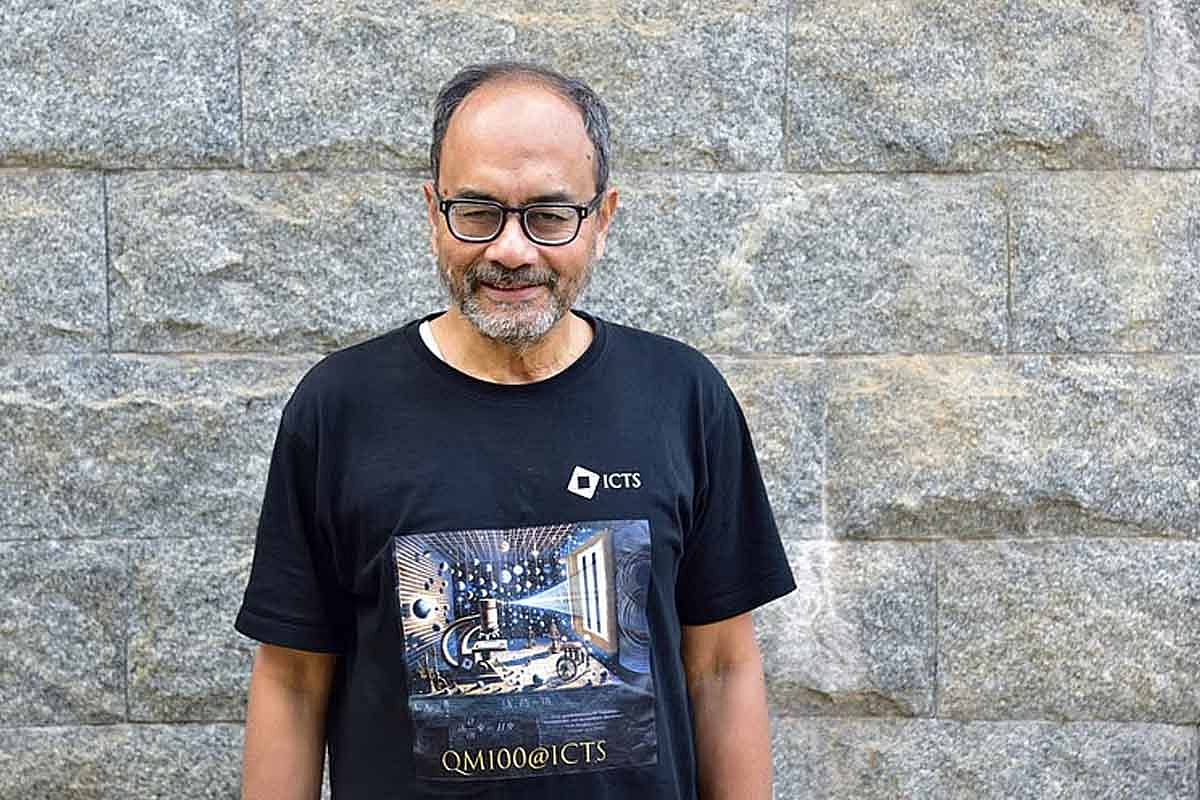
The quest to unravel the mysteries of the universe continues to drive scientists worldwide. From understanding the fundamental building blocks of matter and the forces of nature to exploring the enigmatic depths of black holes, researchers are tirelessly seeking answers to complex questions. Among them is prominent Bengali physicist Ashoke Sen, whose groundbreaking research in string theory has made monumental contributions to theoretical physics.
In ultimate recognition of his pioneering work, Sen has been awarded the Oscar Klein Medal, one of the most prestigious accolades in the field of physics. By receiving this honor for 2026, he has made history as the first Indian scientist to win the award, following in the footsteps of legendary physicists such as Stephen Hawking, Peter Higgs, and Steven Weinberg.

Currently, Professor Ashoke Sen serves as the Infosys-Madhav Chair Professor at the International Centre for Theoretical Sciences (ICTS) in Bengaluru, India. His contributions to string theory are globally recognized. According to this framework, fundamental particles of nature are conceptualized not as zero-dimensional points, but as extremely tiny, vibrating strings or filaments. Variations in the vibrational patterns of these strings determine the distinct properties of various particles. A primary objective of string theory is to unify quantum mechanics and gravity, thereby providing a comprehensive understanding of the fundamental laws of nature. Sen's research has played a crucial role in the development of this theory.
Throughout his distinguished career, Professor Sen has been a trailblazer in theoretical physics. After serving a long and prolific tenure at the Harish-Chandra Research Institute in Allahabad, which he joined in 1995, he transitioned to the ICTS in Bengaluru in 2021, where he continues his profound contributions to science.