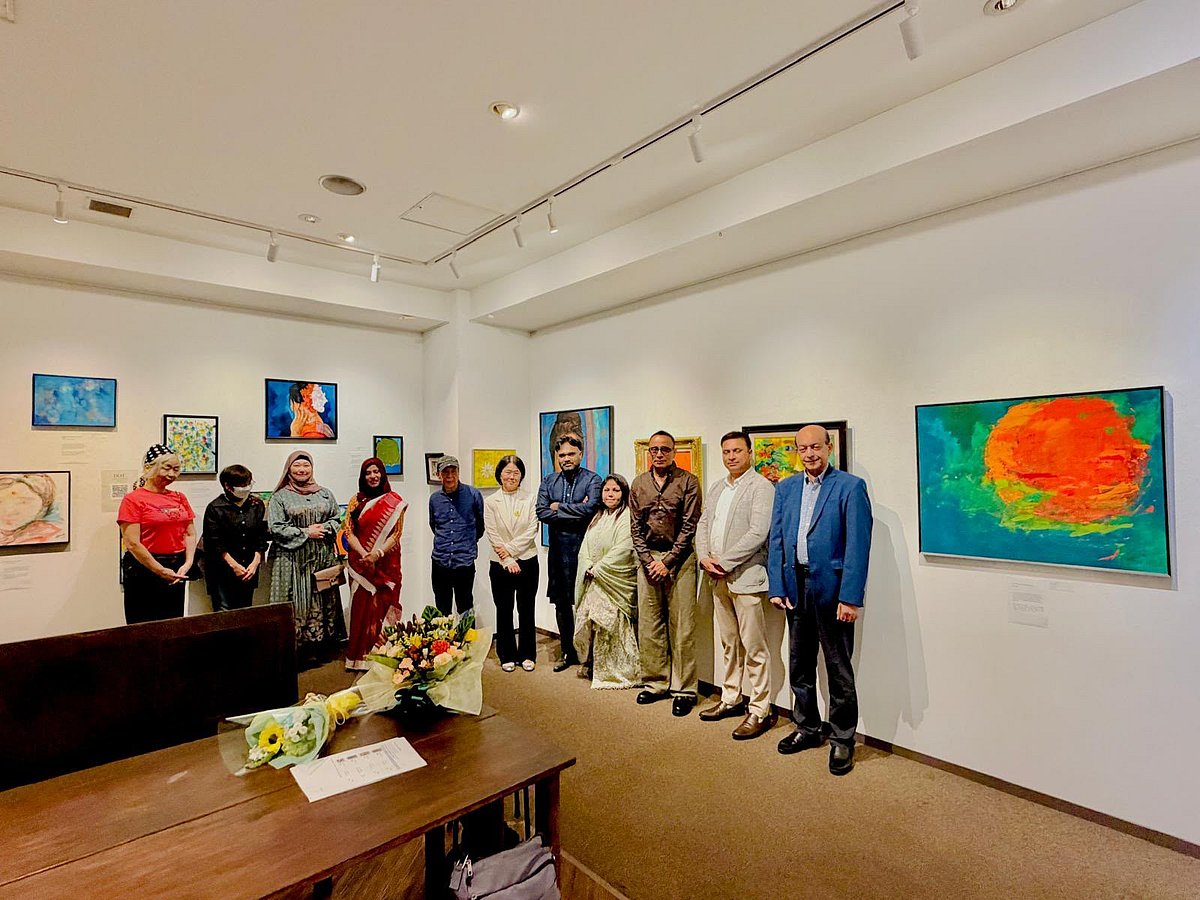
Despite spending many years in Japan, artist Kamrul Hasan Lipu has consistently drawn inspiration from the people, nature, and folk traditions of Bangladesh. Elements such as women's faces, water lilies, traditional sari motifs, and arrangements of red and green reflect his profound and enduring connection to his homeland. These artistic concerns and the various developmental stages of his creative journey have culminated in his first-ever solo exhibition, titled “DOT: The Beginning of Everything” with the Bengali subtitle “Bindu Theke Srishty,” hosted at Gallery Shimizu in Yokohama.
The exhibition officially opened to the public on October 20, featuring Matsudo City Councillor Mir Kazue as the chief guest. The inauguration ceremony was graced by several prominent figures from the Japanese art community, including Japanese painter Asano Yasunori, an adviser to the Yokohama Port Independent Exhibition; paper-cutting artist Mita Chikako; and Gallery Shimizu representative Kazue Shimizu. The event marks a significant milestone in the artist's career, drawing widespread appreciation from art enthusiasts and critics alike.

Featuring a carefully curated collection of 41 distinct artworks, the exhibition is scheduled to run through October 25. The conceptual core of the exhibition offers a fascinating glimpse into the artist's philosophy of creation: how a single dot evolves into a line, how lines develop into complex forms, and how those forms ultimately give shape to the visible world. Kamrul Hasan Lipu seamlessly connects this philosophical perspective with his personal and professional journey, bridging his childhood artistic inclinations, years of dedicated practice, and his lived experiences across both Bangladesh and Japan.
Central to his visual language is the depiction of women's faces, adorned with familiar cultural markers such as the intricate folds of a sari, traditional jewelry, flowers woven into hair, and expressive facial features that evoke the warmth of Bengali domestic life. Beyond mere aesthetic beauty, these artworks serve as a bridge where past, present, and future converge. The harmonious blend of Japanese minimalist sensibilities and vibrant Bengali motifs creates a unique dialogue that resonates deeply with international audiences.
The exhibition has generated considerable enthusiasm among the local Japanese community and the diaspora in Yokohama. By showcasing the rich heritage of Bangladesh through a contemporary artistic lens, Lipu's debut solo exhibition not only celebrates his individual creative evolution but also strengthens cultural ties between Bangladesh and Japan, leaving a lasting impression on all who visit Gallery Shimizu.