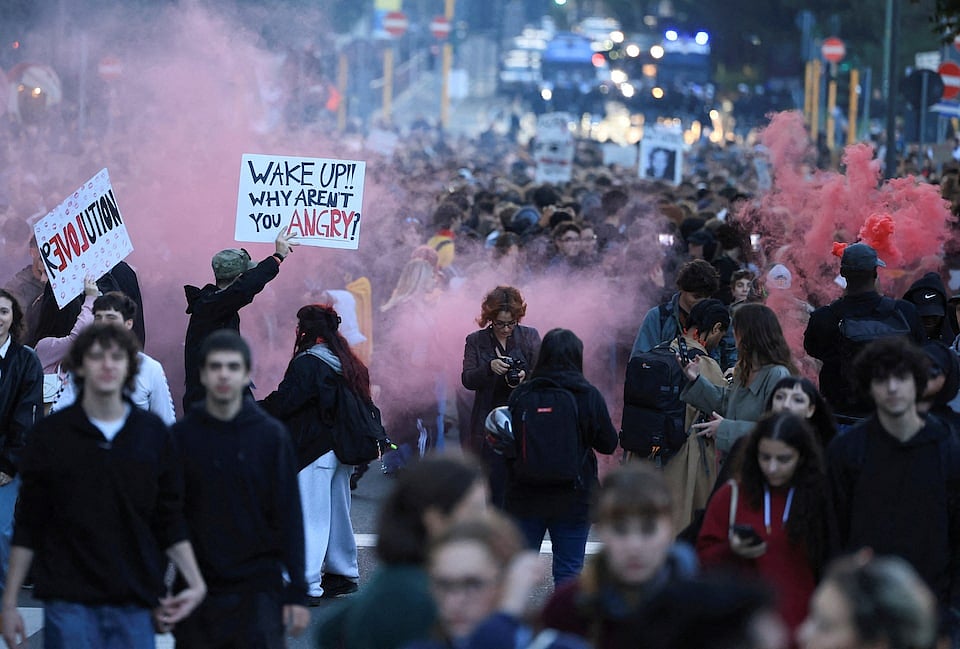
Like several other European countries, Italy has been gripped by widespread protests as thousands of young people, students, and ordinary citizens take to the streets against the rising cost of living, a severe housing crisis, a declining educational system, and various government policies. Following a violent demonstration on October 17, fresh protests erupted on Saturday (October 24) across major Italian cities including Rome, Milan, Turin, Bologna, and Florence. While the demonstrations saw clashes with police, along with the deployment of tear gas and water cannons, they avoided the widespread looting witnessed the previous week.
According to data released by Italy's Department of Public Security, authorities verified the identities of 4,292 individuals in connection with the nationwide protests, violence, and looting. A total of 371 people were taken to police stations, 9 were arrested, and formal charges were brought against 87 individuals. Among those detained at police stations were 110 minors and 69 foreign nationals.

At the core of Italy's recent unrest is a deep-seated uncertainty regarding the future of the younger generation. Many members of Generation Z feel deprived of the economic security and social privileges that their parents' generation enjoyed. Across Europe, the primary catalysts for this youthful discontent include surging education costs, a crippling housing shortage, precarious job markets, and escalating everyday expenses.
The unrest in Italy began to take shape in mid-October when an activist movement named 'Movimento 17 Ottobre' started gaining traction on social media. Utilizing platforms like TikTok, Instagram, and various online chat groups, organizers mobilized youth to join the demonstrations. The protesters' primary grievances center on the skyrocketing costs of essential commodities, fuel, and residential rent across Italy.