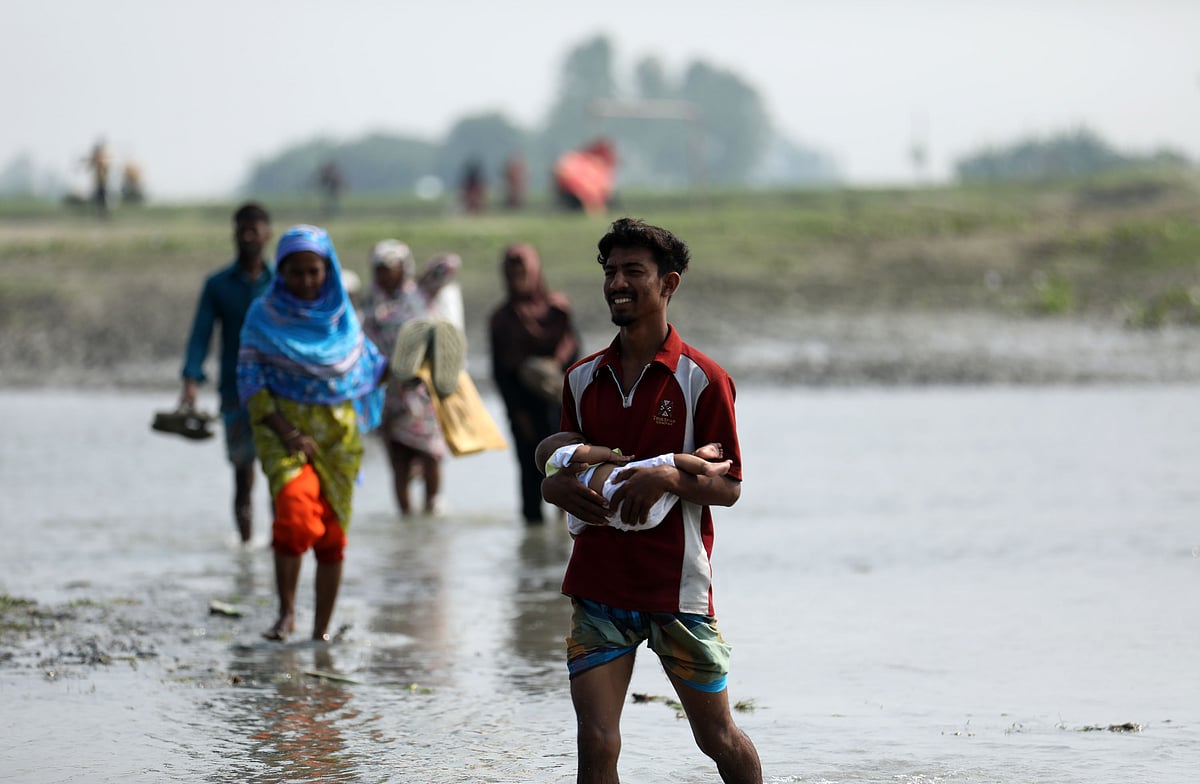
The daily commute for residents living in the remote island chars along the Jamuna River in Sonatala upazila of Bogura has turned into an ordeal of epic proportions. Due to a drastic decline in navigable water levels, traditional boat services at the Mirpur ferry terminal in Pakulla union have virtually ceased. As a result, thousands of people on both sides of the river are forced to wade through knee-deep water and thick mud to cross the riverbed, highlighting a persistent crisis that severely disrupts local life.
Among the worst sufferers of this daily struggle are farmers, school-going children, and ailing patients needing urgent medical attention. Local farmers, after harvesting their crops in the remote chars, are compelled to carry heavy loads of agricultural produce on their heads or shoulders across the shallow, muddy river to reach mainland markets. In some instances, horse-drawn carriages struggle through the knee-deep water, painting a stark picture of primitive transport in modern times. Transporting critically ill patients to urban hospitals has become a perilous gamble, with relatives forced to carry them across the freezing or muddy waters on their backs, risking further health complications.

Education for the children of the char areas faces tremendous obstacles as well. Students must brave this hazardous crossing every single day to attend their classes, often risking damaged schoolbooks and uniforms. Many parents hesitate to send their children to school during dry spells due to the sheer physical danger. Elderly residents and women face even greater hazards; scenes of elderly women using walking sticks for balance or young men carrying their bicycles across the river encapsulate the relentless daily battle for survival. The absence of boats, temporary bamboo bridges, or permanent infrastructural solutions forces these residents to endure immense hardship year after year.
Local inhabitants have long demanded the construction of a permanent bridge or reliable crossing infrastructure across this stretch of the Jamuna, but to no avail. The combination of shifting sandbars and stagnant knee-deep water during the dry season effectively paralyzes mobility. Despite repeated appeals to local authorities and administration, concrete interventions remain scarce. Dredging the river to restore navigability and establishing viable transit solutions are urgently needed to alleviate the sufferings of the marginalized population.
Experts emphasize that modernizing the communication network is paramount for unlocking the economic potential of the char regions and improving living standards. If farmers cannot efficiently transport their yields to mainland markets, the local agrarian economy risks stagnation. Consequently, the relevant government ministries and local engineering authorities must intervene promptly. Implementing emergency dredging projects and constructing permanent infrastructure will be vital to ending the prolonged suffering of the people living along the Jamuna basin.