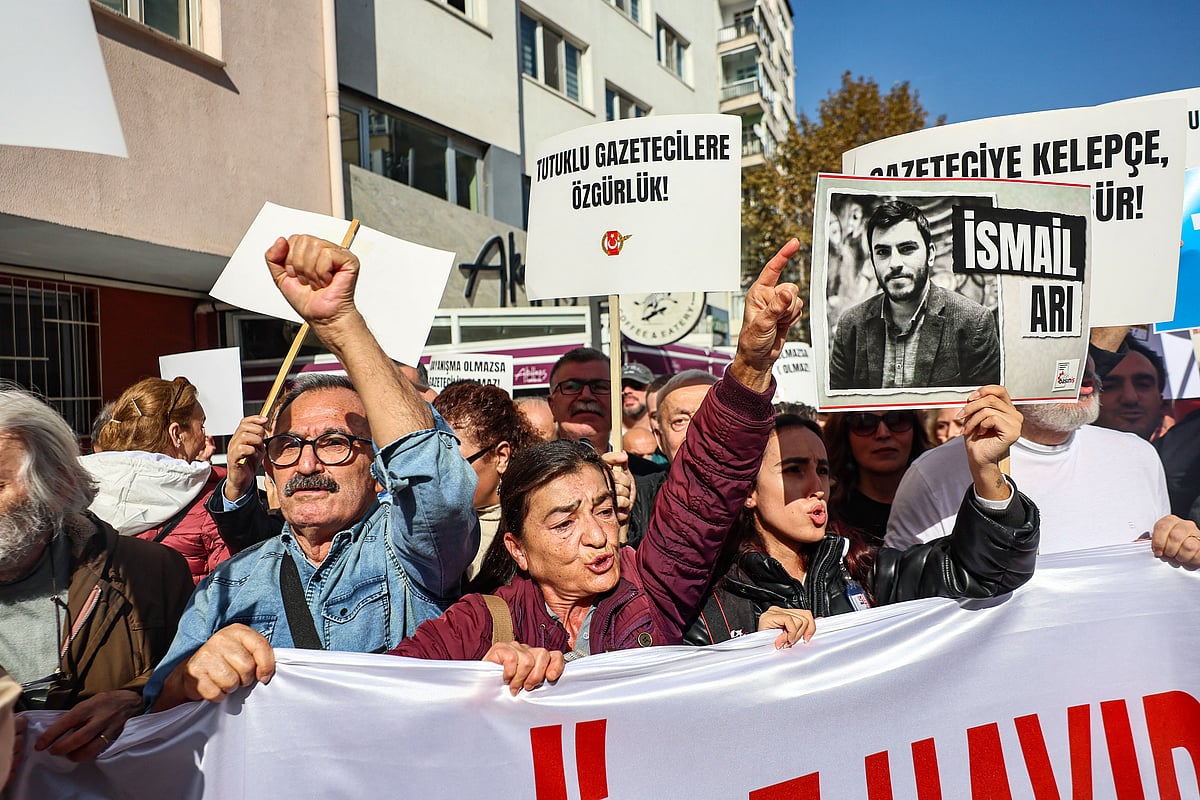
Massive demonstrations erupted across Turkey, specifically in Istanbul and Ankara, as thousands of citizens, journalists, and human rights activists took to the streets to protest the escalating crackdown on freedom of the press. Protesters chanted slogans such as 'Enough is enough, we cannot breathe' and 'We will not be silenced,' holding up photographs of imprisoned journalists and banners condemning the government's heavy-handed tactics against independent media outlets.
The suppression of free media in Turkey has deep roots, tracing back significantly to the failed military coup in 2016. Since then, the administration has systematically tightened its grip on information dissemination, deploying extensive legal actions, arrests, and strict digital censorship. Human rights organizations report that pressure on independent journalism has intensified remarkably over recent weeks. According to the Turkish Journalists' Union, at least eleven journalists have been sent to prison over the past two months alone, while multiple news organizations have been forcibly shut down.

Tensions reached a boiling point earlier this month when police raided the offices of Halk TV, one of Turkey's most popular news channels, abruptly halting its broadcast and appointing a state-administered trustee. This move marked the latest in a series of calculated steps against media organizations known for criticizing President Recep Tayyip Erdogan and his administration. Previously, prominent digital news portals such as T24 also faced severe state censorship, with their websites and social media accounts blocked entirely.
During Saturday's rallies, protesters in Istanbul's Asian side voiced fierce defiance, declaring that they would never bow to state pressure. International press freedom watchdogs have repeatedly expressed alarm over Turkey's plummeting media freedom ranking, noting that dissenting voices are systematically sidelined. Analysts warn that as political tensions persist, the state's stringent control over information could further deteriorate the environment for professional journalism, leaving the country's democratic foundations increasingly vulnerable.