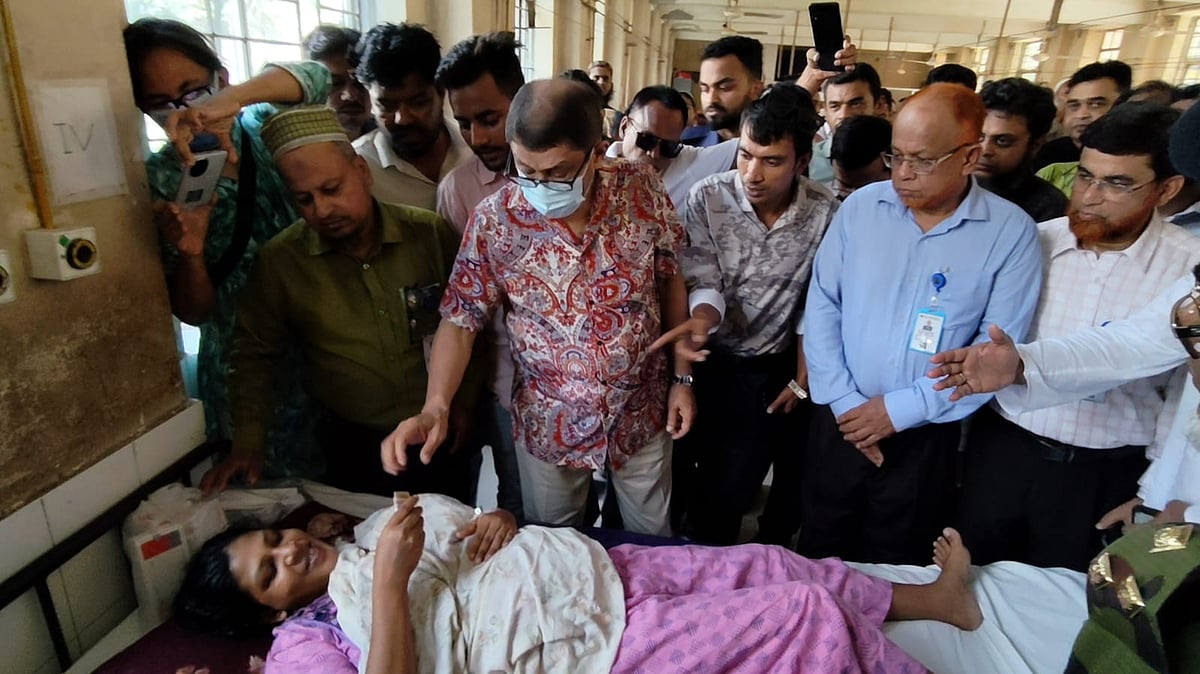
The persistent issue of medical supply shortages in public hospitals has once again come to the forefront following a surprise visit by Health Minister Sardar Md. Sakhawat Hossain to Mymensingh Medical College Hospital. During his inspection on Saturday, the minister encountered a patient named Shiuli Akter, who had recently given birth to twins. She reported that she was forced to purchase all necessary medications, saline, and even surgical gloves from outside sources, as the hospital failed to provide these essential items.
Upon hearing the patient's grievance, the Health Minister expressed deep regret regarding the state of affairs. To provide immediate relief, he personally handed over one thousand taka to the patient to cover the cost of saline. While the patient expressed gratitude for the minister's intervention, she emphasized the urgent need for systemic improvements to ensure that all patients receive the care they are entitled to under the public health system.

Prior to his arrival at the medical college hospital, the minister inspected the health complexes in Phulpur and Tarakanda. During his visit to the Phulpur Upazila Health Complex, he discovered that five doctors were absent without authorization. Consequently, he ordered a one-day salary deduction for the absent medical staff, signaling a zero-tolerance policy toward professional negligence.
Upon reaching Mymensingh Medical College Hospital at 11:52 AM, the minister first inspected the site of a fire that occurred on September 14 in the new building. He then proceeded to the office of the hospital director, Brigadier General Md. Zakir Hossain, to review the digital and manual attendance records of the medical staff. He expressed strong dissatisfaction over the lack of punctuality and the unexplained absence of several doctors during duty hours.
Ensuring the availability of government-supplied medicine and enforcing strict attendance for medical professionals remain significant challenges for the health administration. The minister's surprise inspections and immediate disciplinary actions reflect the government's commitment to restoring discipline within the healthcare sector. Public expectation remains high that these measures will lead to sustainable improvements in hospital management and the consistent delivery of essential medical services to the underprivileged.