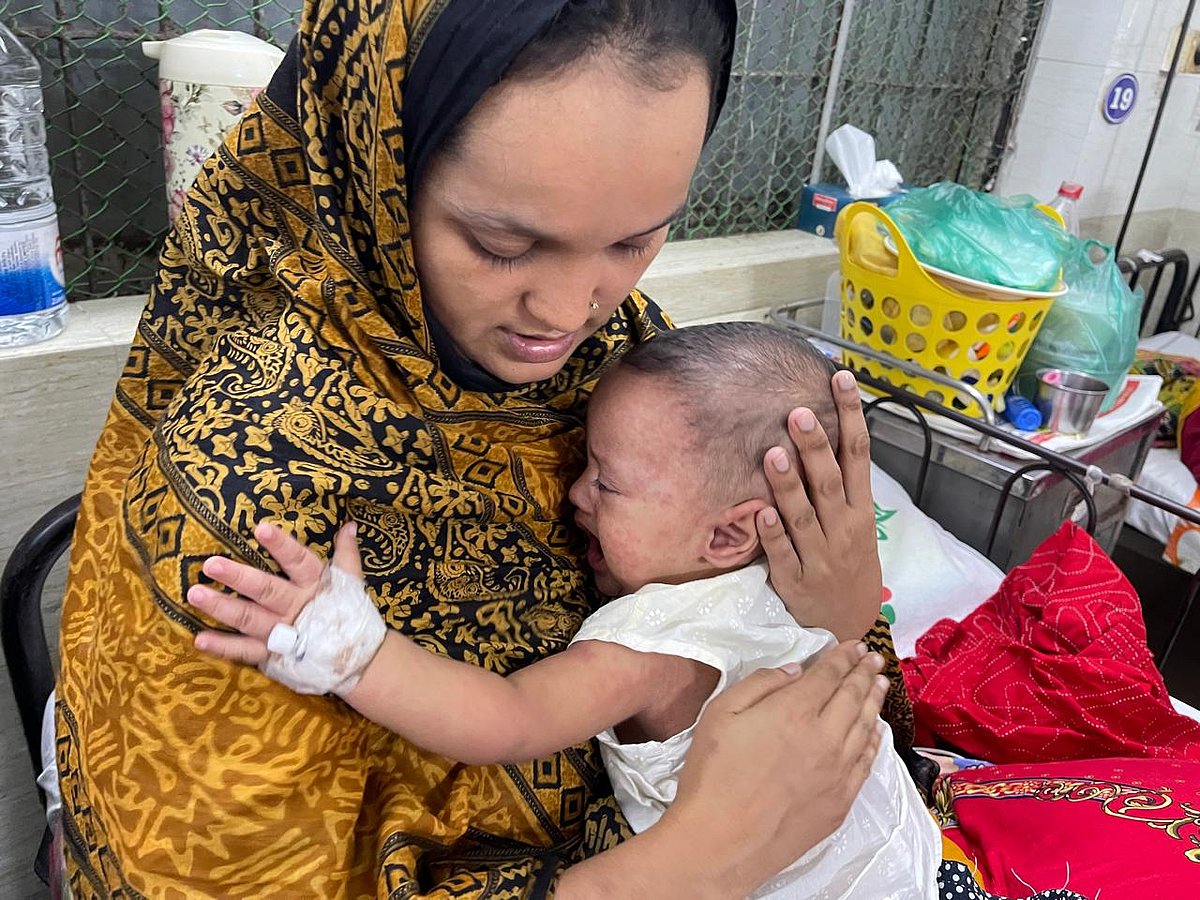
The influx of critically ill children suffering from severe measles and subsequent pneumonia complications from remote corners of the country to Dhaka's premier pediatric hospitals has reached alarming levels. Parents from distant districts like Jashore and Noakhali are undertaking arduous journeys to bring their ailing infants to the Dhaka-based Bangladesh Institute of Child Health, desperate for advanced medical intervention as local treatments fail to yield results.
Medical professionals point out that a dangerous combination of measles, secondary pneumonia, and acute respiratory distress is pushing these young patients to the brink. In many regional health facilities, the lack of pediatric Intensive Care Units (ICUs) and specialized life-support equipment prevents timely and effective treatment. Consequently, by the time families manage to bring their children to the capital after weeks of futile local treatments, the infections have already progressed to life-threatening stages, imposing immense physical, emotional, and financial tolls on vulnerable households.

Upon reaching major hospitals in Dhaka, families frequently encounter daunting bureaucratic and logistical hurdles. Relatives have reported struggling to secure immediate oxygen supply and scarce ICU beds during critical moments, exposing severe strain on urban healthcare infrastructure. The sheer volume of patients arriving from rural areas often overwhelms available resources, leaving both families and medical staff in highly challenging circumstances.
Public health experts emphasize the urgent need to evaluate why vaccine-preventable diseases like measles are causing such severe complications and why early-stage diagnoses are frequently missed at the grassroots level. Strengthening primary healthcare facilities, enhancing local diagnostic capabilities, and rigorously enforcing routine immunization programs are seen as vital steps to curb this crisis. Without bolstering regional healthcare capacity, capital-centric patient overload will remain an intractable problem.
Addressing this persistent public health challenge requires a multi-pronged approach from health authorities. Upgrading pediatric critical care units across divisional and district hospitals is paramount to ensuring that families do not have to travel hundreds of kilometers in desperation. Comprehensive community awareness campaigns and strict monitoring of vaccination coverage are equally essential to protect children from preventable tragedies in the future.