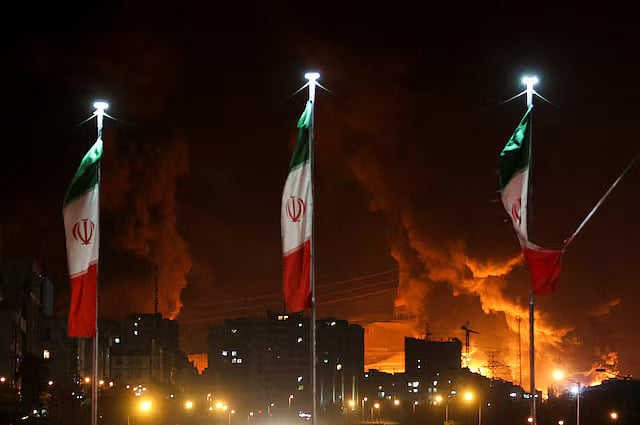
The geopolitical landscape of the Middle East is facing heightened volatility following Israeli Prime Minister Benjamin Netanyahu's explicit declaration that toppling the Iranian government is his primary strategic objective. With domestic political pressure mounting ahead of upcoming national elections and dipping poll numbers, Netanyahu’s aggressive rhetoric points toward potential new military escalations. However, defense analysts widely concur that executing airstrikes alone is structurally insufficient to collapse a sovereign regime, while launching a full-scale ground invasion into Iran would demand colossal military resources that Israel lacks independently.
Iran has successfully weathered previous rounds of hostilities, demonstrating remarkable resilience and maintaining robust retaliatory capabilities. Tehran's military apparatus retains the capacity to strike not only Israeli targets but also various regional neighboring countries hosting American military installations across the Persian Gulf. Consequently, undertaking unilateral aggressive military actions against Iran could backfire profoundly, dragging Israel into a devastating multi-front regional war that would severely strain its domestic security and economy.

A critical factor in this strategic equation is the geography of Iran's military infrastructure, much of which is deeply entrenched inside heavily fortified underground bunkers beneath rugged mountain ranges. Destroying such deeply buried strategic assets requires specialized heavy ordnance and bunker-buster capabilities possessed predominantly by the United States military. Independent military assessments suggest that the Israeli Air Force alone lacks the heavy strategic payload necessary to permanently neutralize these subterranean installations.
Recent high-level diplomatic and military consultations, including discussions between Netanyahu and US President Donald Trump, alongside US Defense Secretary Pete Hegseth's visit to Israel, have preceded these latest saber-rattling declarations. Despite these high-profile visits, Washington has remained non-committal regarding direct combat participation or active involvement in any regime-change operation in Tehran. Military experts emphasize that without explicit, boots-on-the-ground or direct logistical backing from the United States, Israel's unilateral military options against Iran carry prohibitive strategic risks.
As regional tensions approach a potential boiling point, international diplomats are expressing profound alarm over the trajectory of these events. Netanyahu's domestic political survival tactics risk triggering a catastrophic military conflagration across the Middle East. With Tehran maintaining high combat readiness and warning of severe retaliation, the margin for diplomatic error is vanishingly thin, leaving the entire region vulnerable to an unpredictable and volatile security spiral.