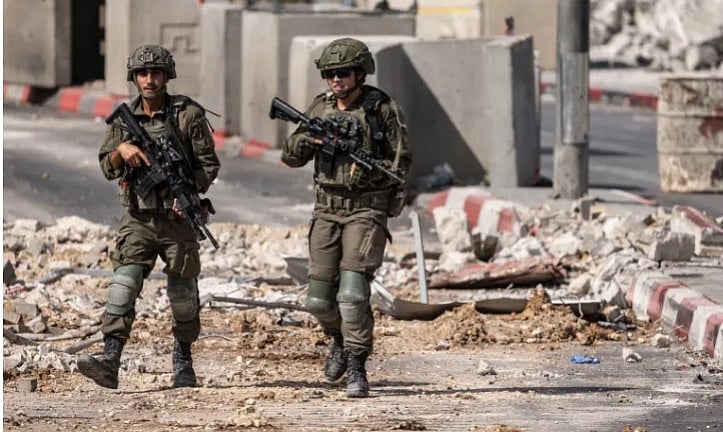
The Israeli military has launched a massive and aggressive security operation in the occupied West Bank city of Hebron, effectively turning parts of the urban center into a ghost town. The crackdown follows a deadly shooting incident last Friday that resulted in the deaths of two Israeli soldiers and two suspected Palestinian assailants. Since the incident, heavily armed Israeli troops have sealed off large sections of the city, placing neighborhoods under strict military control and instilling deep fear among the civilian population.
According to independent field reports, the military's punitive measures have targeted the neighborhoods where the suspected attackers lived. Entire residential blocks have been ransacked, and families have been given mere minutes at gunpoint to vacate their homes. Properties that have been forcefully evacuated are now being marked with large 'X' symbols by the troops, reminiscent of forced displacement tactics. Furthermore, multiple residential structures surrounding the checkpoint where the initial attack took place have been systematically demolished by military bulldozers.

Political analysts and journalists on the ground emphasize that this military operation is deeply intertwined with domestic Israeli politics. Key figures within the current hardline government, some of whom are illegal settlers residing in Hebron themselves, are reportedly using the security breach to exact revenge and consolidate support among their radical nationalist base. The escalation is seen as a calculated move by far-right ministers to project strength and pander to their core constituents at the expense of Palestinian civilian lives.
The humanitarian situation in Hebron has deteriorated rapidly, with local infrastructure paralyzed and daily life brought to a complete standstill. Residents are trapped without adequate access to basic necessities, medical care, or safe shelter. Human rights organizations have strongly condemned the collective punishment and forced evictions, pointing out that such actions violate international humanitarian law. Despite international concerns, the Israeli security establishment continues to defend the raids as a necessary counter-terrorism measure.
As the military operation persists, fears are mounting that the heavy-handed tactics in Hebron could ignite a broader flare-up across the occupied West Bank. The ongoing displacement of families and the destruction of civilian property underscore the deepening crisis in the region. Without immediate international diplomatic intervention, the plight of Hebron's residents threatens to worsen, further entrenching the cycle of violence and instability in the Middle East.