

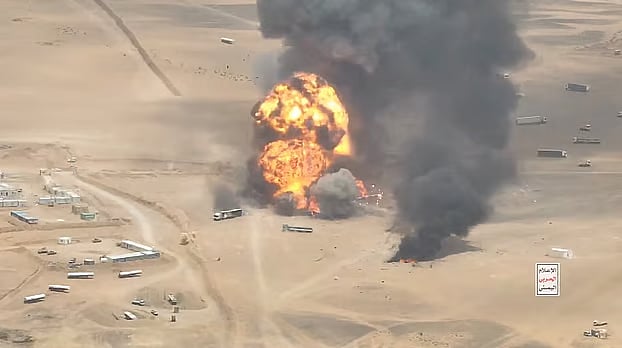
Saudi Arabia has faced a series of coordinated attacks targeting its critical infrastructure and military installations. The Houthi militant group, based in Yemen, claimed responsibility for seven separate strikes, aiming at key locations including the King Khalid International Airport in Riyadh, Aramco facilities in Yanbu, the Rabigh oil refinery, and vital oil pipelines. Other targets reportedly included the King Fahd International Airport in Dammam, Najran Airport, and the Khamis Mushait military base.
In response to the aggression, Saudi civil defense authorities confirmed the interception of two ballistic missiles directed toward the holy cities of Makkah and Madinah. The Saudi air defense systems successfully neutralized the threats, though the resulting debris fell across several residential and non-residential areas. Fragments were recovered in Makkah’s Wadi al-Mugammass, Jeddah’s Al-Nuzha district, Taif’s Wadi Jalil, and the Masturah center in Rabigh.

While the Houthi group boasted about the success of their operations against oil infrastructure, they explicitly denied targeting Makkah or Madinah. They maintained that their military campaign was strictly focused on undermining Saudi Arabia’s economic and military assets. This distinction in their narrative highlights the ongoing tension and the strategic nature of the conflict.
The incident has raised significant concerns regarding regional stability and the safety of international energy supply chains. Saudi officials have reiterated their commitment to national security, stating that they are fully prepared to counter any further hostile acts. The international community has expressed alarm over the escalation, emphasizing the need for a peaceful resolution to the long-standing Yemen conflict.
Currently, Saudi security forces remain on high alert, with civil defense teams working to clear debris and assess any potential damage to critical infrastructure. While there have been no immediate reports of major disruptions to oil production or international flight schedules, the situation remains fluid. Analysts suggest that such persistent attacks continue to complicate diplomatic efforts aimed at achieving a lasting ceasefire in the region.


