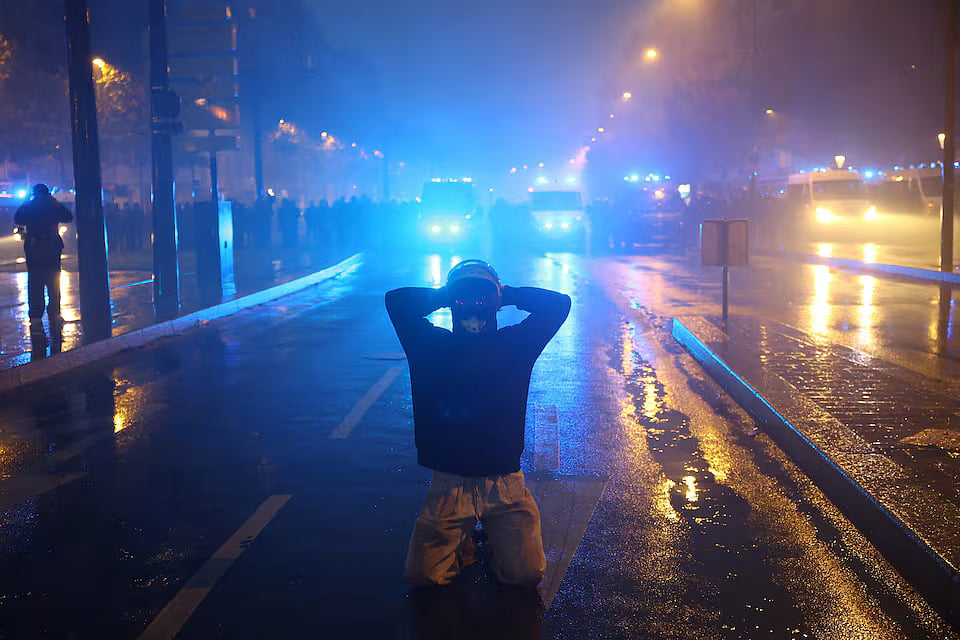
The streets of France are currently witnessing widespread unrest as thousands of citizens have taken to the streets to protest against the soaring cost of living and the deepening crisis within the national education system. Demonstrators argue that the government has remained largely indifferent to the deteriorating conditions of schools and the financial struggles of ordinary families. Emelie Grandrie, a mother who participated in the Paris protests, stated that despite facing tear gas last week, she felt compelled to return to the streets to secure a better future for her child, highlighting the deep-seated frustration among the public.
Students have been at the forefront of these demonstrations, voicing their concerns over crumbling infrastructure and a severe shortage of teachers. Fifteen-year-old Aaron described the state of his school as dilapidated and criticized the government's lack of action. Many protesters expressed that the authorities seem more concerned with property damage during demonstrations than with the systemic poverty and inequality affecting the youth. This sentiment was echoed on various placards, which questioned the government's priorities regarding justice and human rights.

Clashes between protesters and riot police were reported in several cities, including Toulouse. Despite the heavy police presence and the use of force, demonstrators remain defiant. Clara Lebbadi, a 22-year-old student, emphasized that the focus on damaged storefronts ignores the plight of those who are becoming increasingly impoverished. Similarly, teacher Benedicte Pittion, who joined the march with her 16-year-old daughter, stated that the government's refusal to listen to the youth has left them with no choice but to protest.
Participants believe that yielding to fear would only undermine their cause. Nadege, a communications worker, noted that while people are afraid, they are determined to protect their rights. This wave of protests represents a significant challenge to the current administration's stability. Analysts suggest that if the government fails to address these grievances with concrete policy changes, the intensity of the movement is likely to escalate.
Ultimately, the protests reflect a broader social discontent that transcends economic issues. Citizens are now demanding immediate accountability and tangible solutions from the government. The coming days will be critical in determining whether the administration can navigate this crisis or if the unrest will continue to destabilize the nation's political landscape.