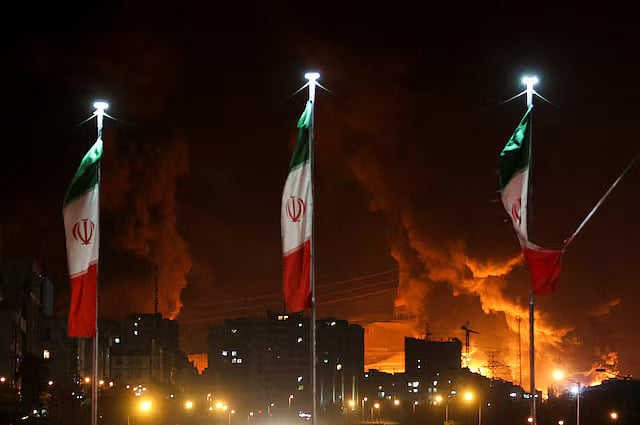
As military and political tensions continue to escalate in the Middle East, growing concerns over a potential full-scale war have prompted renewed international diplomatic efforts. New and comprehensive proposals have recently been submitted to both Iran and the United States in a bid to de-escalate the volatile situation and steer both nations away from a catastrophic military confrontation.
Over the past several months, relations between Washington and Tehran have deteriorated significantly, driven by disputes over regional influence, security dynamics, and stalled nuclear negotiations. The recurrent flare-ups in maritime trade routes and the active posture of regional proxy networks have pushed the two adversaries dangerously close to the brink. Global leaders and geopolitical analysts have repeatedly warned that a miscalculation by either side could engulf the entire region in widespread devastation.

The newly introduced diplomatic framework emphasizes confidence-building measures, gradual relaxation of certain economic constraints, and a return to structured multilateral dialogue. While specific details remain closely guarded, the initiative reportedly touches upon critical issues including regional security guarantees, maritime navigation safety, and the revival of diplomatic channels. However, neither the White House nor the Iranian leadership has issued an official, definitive response regarding their acceptance of the terms.
Experts note that overcoming decades of deep-seated distrust remains a formidable challenge. The United States continues to demand concessions regarding regional security and ballistic missile development, while Iran maintains a firm stance on its sovereign rights and the immediate lifting of crippling economic sanctions. Consequently, mediators are navigating a narrow diplomatic path to forge a compromise acceptable to both capitals.
International bodies and neutral nations are continuously urging maximum restraint, emphasizing that a major conflict would trigger severe global repercussions. Beyond the immediate human cost, a regional war would heavily disrupt global energy markets, spike oil prices, and severely destabilize the world economy at a time of post-pandemic fragility.
Whether these latest proposals will successfully translate into meaningful dialogue depends largely on the political will in both Washington and Tehran. If both administrations choose the path of diplomacy, it could mark a turning point toward regional stability. Conversely, failure to engage constructively leaves the Middle East perilously exposed to further escalation and conflict.