A manufacturing facility located in Camp 20 of the Thaikhangkhali Rohingya refugee camp in Ukhia, Cox's Bazar, is currently producing an average of 15,000 soaps daily. These soaps are distributed free of charge to Rohingya refugees for laundry and sanitation purposes, ensuring essential hygiene maintenance within the camps. Since its official launch in January of this year, the plant has produced approximately 700,000 pieces of soap, according to the operating agency. The initiative, managed by the local non-governmental organization Pulse, stands as a notable step toward empowering the displaced population.
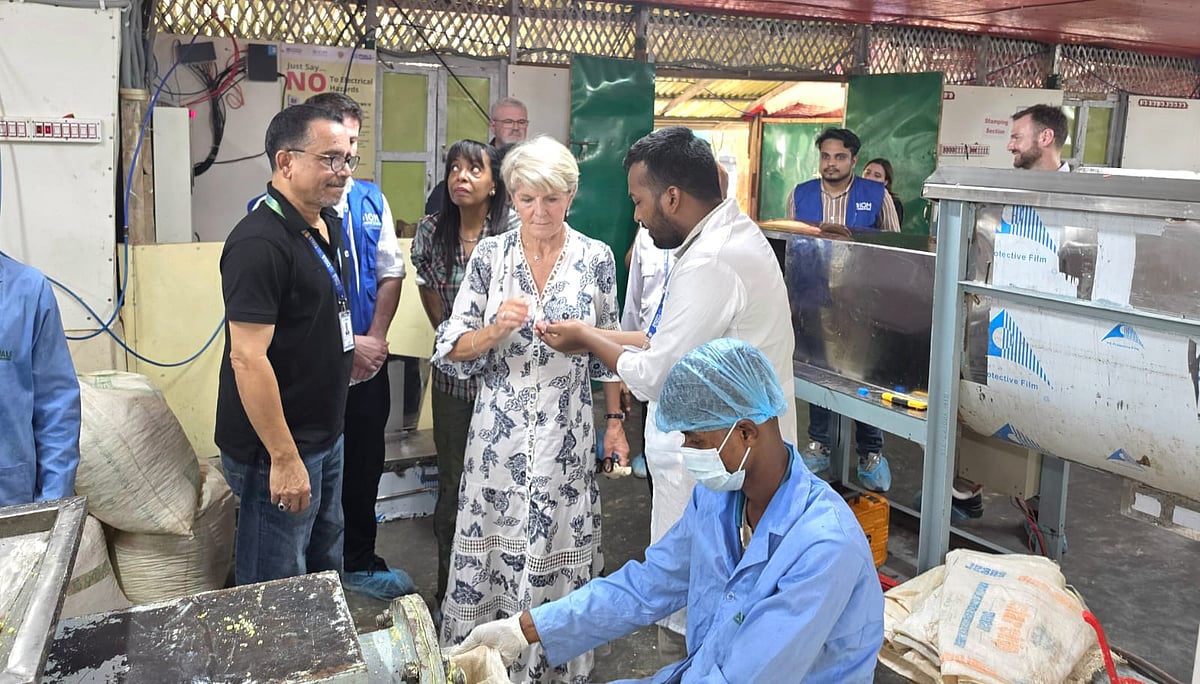
A high-level five-member delegation, led by the United Nations Secretary-General's Special Envoy on Myanmar, Julie Bishop, visited the factory on Tuesday afternoon to inspect the soap manufacturing process and product quality firsthand. The delegation arrived at Cox's Bazar airport from Dhaka around 10:00 AM and traveled by road to the Ukhia camp. Arriving at the facility around 1:00 PM, the UN delegates closely examined the raw materials, production techniques, and quality control measures implemented at the plant.

During the visit, UN Special Envoy Julie Bishop praised the initiative, highlighting its positive impact on creating livelihood opportunities and fostering self-reliance among both the Rohingya refugees and the host community. She noted that such community-based programs not only safeguard public health and hygiene within the congested camps but also instill a sense of productivity and dignity among the residents by engaging them in meaningful work.
The visiting delegation included UN Resident Coordinator in Bangladesh, Gwyn Lewis (referred locally as Gwyn Lewis/Gwyneth Flora-Smerezniak contextually), UNHCR's Acting Representative in Bangladesh Juliette Murekeyisoni, Political Affairs Officer Duncan Wilson from the Special Envoy's office, and Associate Public Information Officer Pya Thet Chaing. The presence of such prominent international figures underscores the United Nations' steadfast commitment and continuous support for humanitarian operations in Cox's Bazar.
During the briefing, Pulse Executive Director Abu Morshed Chowdhury detailed the operational framework of the factory, management strategies, and how the project generates income and employment opportunities for the marginalized population. The delegates expressed satisfaction with the working environment and the meticulous quality assurance protocols maintained throughout the manufacturing cycles. Discussions were also held on potential future expansions to broaden the scope of such self-reliance projects.
International agencies have long been providing humanitarian aid to the displaced Rohingya population residing across Ukhia and Teknaf camps. However, current strategic focus has increasingly shifted toward sustainable livelihood programs and capacity-building measures. The soap manufacturing enterprise in Ukhia exemplifies this progressive approach, serving as a beacon of hope and resilience amidst an ongoing protracted refugee crisis.