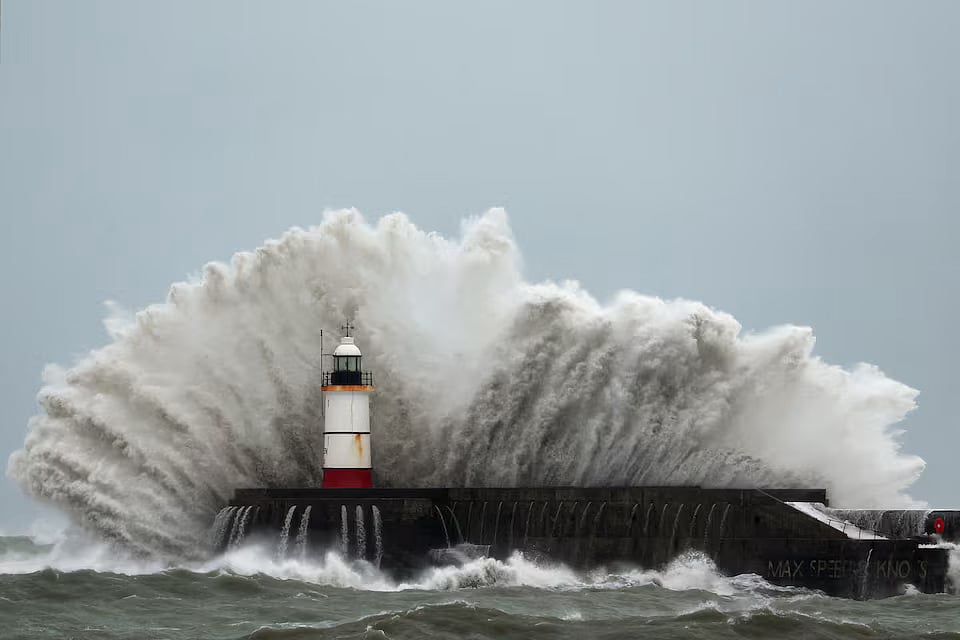
Northern Europe has been severely impacted by a series of powerful storms, namely Boelo and Osten, which battered the region over a 24-hour period. The extreme weather has left more than 150,000 homes without electricity and forced the cancellation of over a hundred flights. Essential communication networks, including mobile services, have experienced widespread outages, disrupting normal daily life across the affected nations.
According to local authorities, the storms have cut power to over 82,000 homes in the United Kingdom, nearly 60,000 in France, and at least 10,000 in Germany. In western Scotland's Argyll and Bute council area, winds reached a staggering peak speed of 135 kilometers per hour. Falling trees and downed power lines forced the closure of multiple roads and railway lines, paralyzing transportation networks in the region.

The Energy Networks Association in the UK reported that at the height of the crisis, more than 400,000 properties were left without power. On Friday, the fierce winds of Storm Osten tore away a section of an old, disused pier in Brighton on the southern coast of England, a structure that had remained abandoned since a major fire in 2003. Across the English Channel, northern France also bore the brunt of violent gale-force winds.
France's primary electricity distributor, Enedis, stated that at the peak of Storm Osten on Saturday, approximately 288,000 households were left in the dark. Although crews managed to restore power to many areas, nearly 59,000 homes remained without electricity by Sunday afternoon, with Normandy and Brittany being the hardest-hit regions. Enedis deployed around 2,600 technicians and contractors to work continuously on restoring power lines.
Climate scientists and meteorological experts have warned that due to ongoing global warming, such extreme weather events could become more frequent and severe in the future. As the region grapples with the aftermath of the season's first major autumn storm, authorities are urging heightened preparedness and resilience measures to cope with increasingly volatile atmospheric conditions.