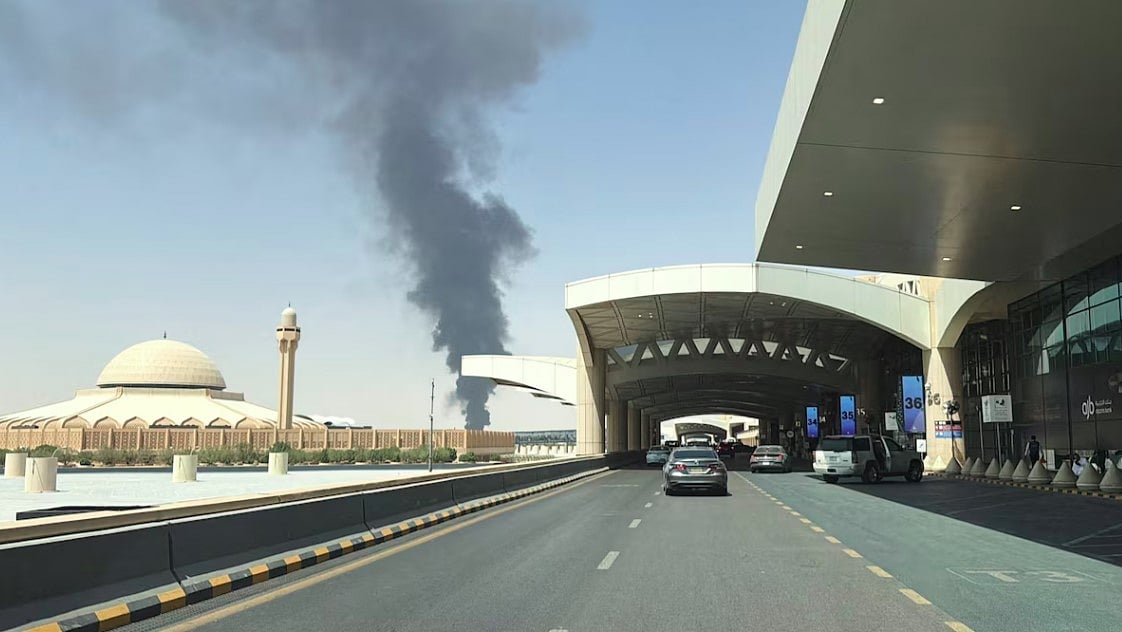
Whenever a fire breaks out at an oil facility in Saudi Arabia, the shockwaves are felt far beyond the Arabian Peninsula, echoing directly into the modest households of rural Bangladesh. This impact manifests as soaring global fuel prices, the sudden loss of employment for a migrant worker supporting their family, or the shattering of dreams built on high-interest loans taken to fund a journey abroad. International relations are fundamentally about understanding how these distant geopolitical events intertwine with the everyday lives of ordinary people. The question of security arises when states and individuals find themselves vulnerable within this interconnected web. The ongoing conflict between Saudi Arabia and the Houthi movement has once again brought this intricate reality to the forefront of global discourse, moving far beyond simple border skirmishes to encompass regional power rivalries, global supply chains, and the fundamental livelihoods of millions of migrant workers.
Analyzing the core of this crisis requires clarifying several fundamental political and social distinctions. First, Saudi Arabia is a sovereign state, whereas the Houthis constitute a powerful armed political movement in Yemen formally known as Ansar Allah. Conflating the political ambitions of the Houthis with the entire Yemeni populace would be an analytical error. Similarly, the global Muslim community does not function as a monolithic political entity. Sharing the same faith does not automatically align the national interests, security perceptions, or historical experiences of different nations and ruling authorities. While Arabic is the primary language in both Saudi Arabia and Yemen, and Islam is deeply rooted in both societies, linguistic and religious commonalities do not erase profound conflicts of interest. Religion can serve as a foundation for moral solidarity, but it does not automatically resolve disputes concerning borders, resources, political power, and regional representation.

Furthermore, while Iran is a predominantly Muslim nation, it is not an Arab country, possessing its own distinct Persian heritage and geopolitical strategy. Consequently, reducing the complex conflicts of the Middle East merely to squabbles among Arabic-speaking populations fails to capture the true reality. Although historical sectarian divisions between Shia and Sunni communities remain a relevant factor, they do not provide a comprehensive explanation for the entire crisis. The Houthi movement is driven by localized ambitions for power, a historical grievances narrative within Yemen, and broader regional geopolitical strategies. Conversely, Saudi Arabia prioritizes its national security and the protection of its critical energy infrastructure above all else. Amidst this multidimensional conflict, labor-sending countries like Bangladesh find themselves trapped in a state of invisible and persistent vulnerability.
Saudi Arabia remains one of the largest and most critical destinations for Bangladeshi labor migration. Millions of Bangladeshi workers are employed in construction, service sectors, oil refineries, and domestic roles, contributing significantly to the national economy through steady remittances. However, whenever military tensions or security crises erupt in the Middle East, these migrant workers are invariably the hardest hit. Houthi drone and missile attacks frequently target Saudi energy infrastructure and populated areas, not only causing severe economic disruptions but directly endangering the lives of foreign laborers. Consequently, businesses often shutter operations, wages remain unpaid, and workers face sudden forced repatriation. Families that borrowed heavily or took out exorbitant loans to send their breadwinners abroad are left utterly destitute.
At the state and policymaking levels, a long-term resolution to this vulnerability remains elusive. While various international diplomatic initiatives attempt to broker peace in the Middle East, the safety, security, and economic protection of migrant workers are frequently overlooked. Although the Bangladeshi government periodically emphasizes diversifying labor markets, reducing reliance on the Middle East overnight remains an immense challenge. Therefore, establishing robust mechanisms for the rehabilitation of affected migrant workers, ensuring their rapid evacuation during emergencies, and utilizing diplomatic channels to safeguard their rights have become absolute imperatives. It is vital to formulate strategic, long-term policies to ensure that the livelihoods of ordinary Bangladeshi laborers are not sacrificed on the altar of global geopolitical conflicts.