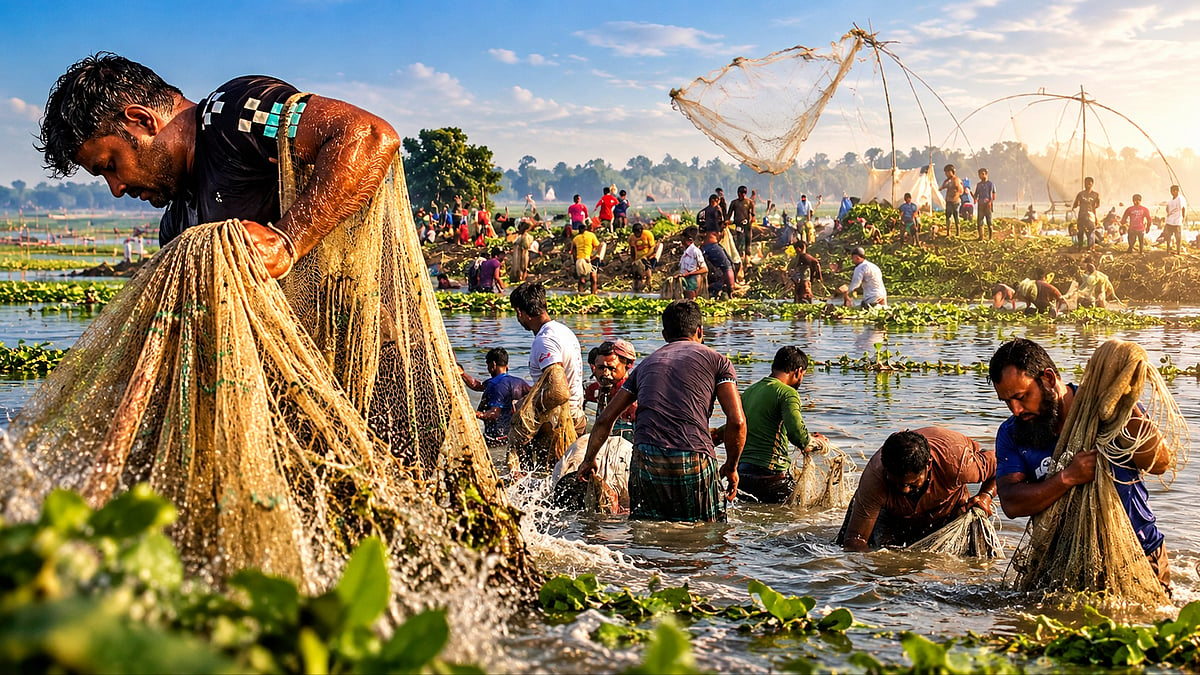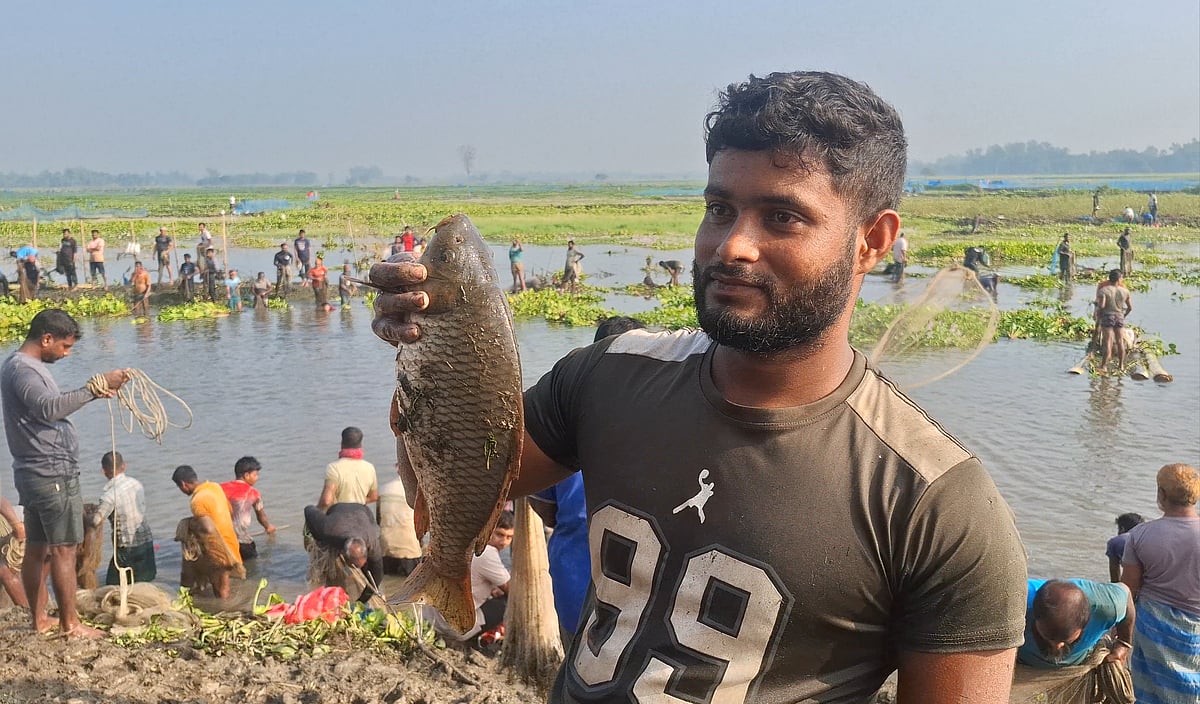
The traditional fishing festival at the Burir Bandh irrigation project in Thakurgaon has once again brought together hundreds of enthusiastic locals, turning a routine water-release operation into a vibrant community celebration. Despite meager catches that often yielded only a couple of small fish after multiple attempts, the atmosphere remained electric with laughter, friendly banter, and shared joy among participants of all ages.
As dawn broke on Friday, the silent stillness of the Suk River was broken by the rhythmic splashing of nets being cast into the receding waters. People stood shoulder-to-shoulder on the barrage structure or waded waist-deep into the chilly water, armed with traditional fishing tools like cast nets and push nets. For individuals like Parimal Roy and his friends, who walked away with just a couple of small Puntius fish after hours of effort, the actual quantity of the catch mattered little compared to the sheer euphoria of the communal experience.

Historical records from the Bangladesh Water Development Board indicate that the Burir Bandh irrigation project was established during the 1951-52 fiscal year across the borders of Akcha and Chilarang unions to support dry-season agriculture. Over the years, the project expanded to include extensive canals irrigating over a thousand hectares of farmland. Traditionally, as the water level is lowered for seasonal agricultural preparation, the ensuing shallow pools create a natural playground for local residents to indulge in communal fishing.
Beyond the catch itself, this annual gathering serves as a vital cultural anchor for the rural community. Friends and relatives living afar often time their visits to coincide with the event, transforming the banks of the Burir Bandh into a bustling social fair. It is a rare occasion where modern stresses are temporarily forgotten, replaced by the simple, enduring pleasures of rural camaraderie, shared traditions, and collective festivities passed down through generations.