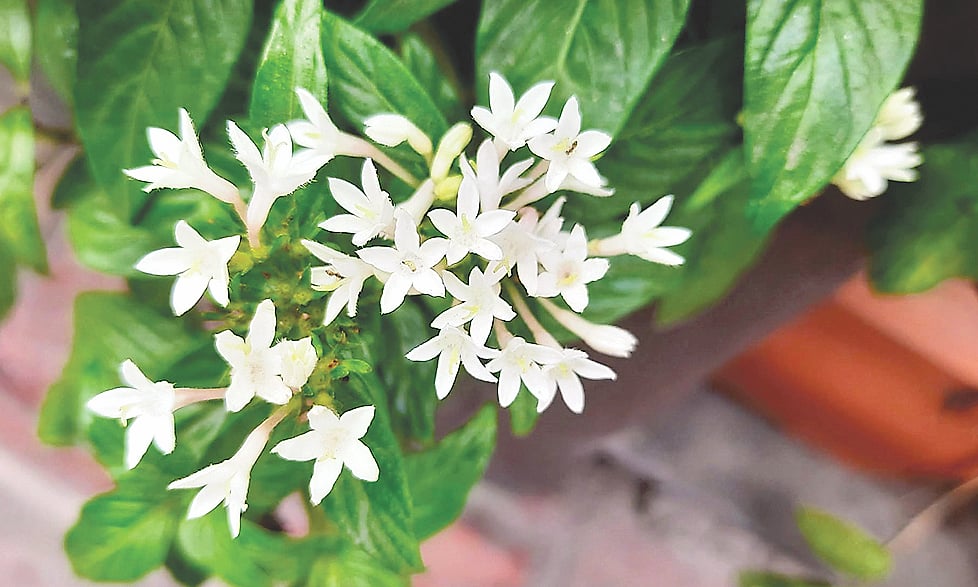
During a stroll through the bustling commercial district of Banani in Dhaka, a captivating display of nature's beauty recently came into view. Situated in front of the Bangladesh-United Arab Emirates Friendship Complex, a row of decorative flower tubs held a pleasant surprise: vibrant white pentas flowers blooming amidst a collection of various foliage. Despite the humid weather characteristic of the monsoon season, the serene and spotless appearance of these white blossoms offered a refreshing visual retreat for passersby navigating the concrete landscape.
Scientifically known as Pentas lanceolata, this enchanting plant belongs to the Rubiaceae family and is recognized for its shrubby growth habit. The most striking characteristic of the pentas is its inflorescence, where numerous small, five-petaled flowers gather in dense, rounded clusters. From a distance, these clusters resemble a constellation of bright white stars resting against a backdrop of deep green leaves, which explains why the species is popularly referred to in English as the 'Egyptian Starcluster'.

Etymologically, the name pentas is derived from the Greek word 'penta', meaning five, directly referencing the five distinct petals of the flower. Botanically speaking, the natural habitat of this species ranges from tropical regions of Africa to parts of the Arabian Peninsula. However, due to its ornamental appeal and resilience, it is now widely cultivated as an ornamental garden plant across various tropical and subtropical regions worldwide.
While white is a prominent and elegant variety, pentas plants also boast vibrant cultivars in shades of red, pink, purple, and lavender. Gardeners and urban horticulturists particularly favor these plants because their nectar-rich blooms naturally attract butterflies, bees, and other pollinators, thereby supporting local urban biodiversity. Nonetheless, the pure white variety holds a distinct charm, as the stark contrast between the immaculate white petals and dark green foliage evokes a sense of profound simplicity and elegance.
In a dense metropolis like Dhaka, where rapid urbanization often encroaches upon natural spaces, the presence of such delicate floral displays in public areas plays a crucial role in enhancing urban aesthetics. Environmentalists and nature enthusiasts emphasize that expanding roadside greenery and integrating flowering shrubs into city architecture can significantly alleviate urban stress and improve the overall mental well-being of city dwellers, transforming concrete jungles into more vibrant and liveable habitats.