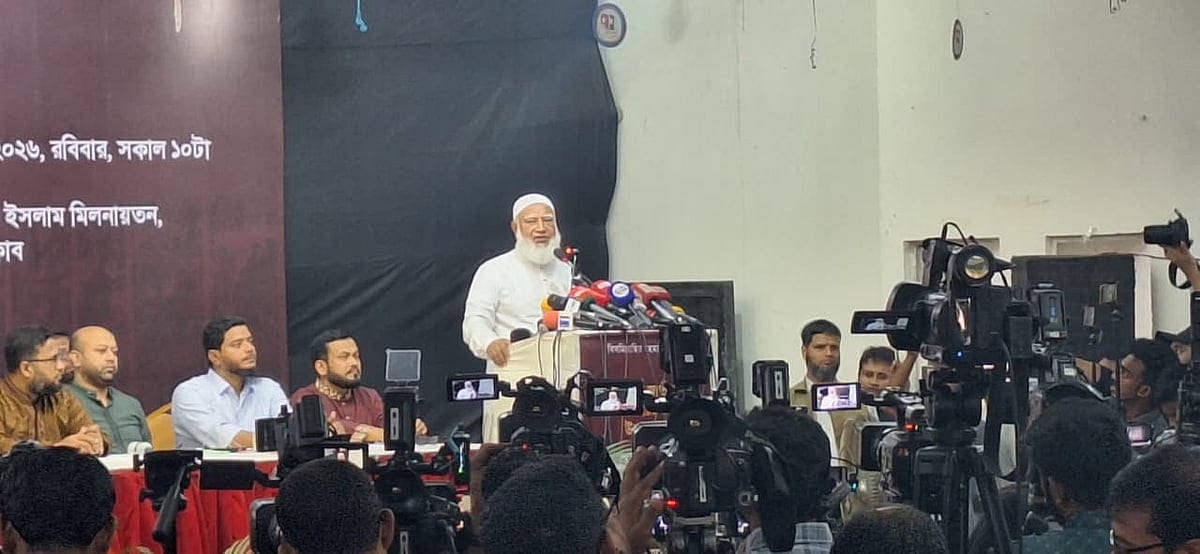
Bangladesh Jamaat-e-Islami Ameer Shafiqur Rahman has strongly urged the government to step back from the path of constitutional amendments, labeling such moves as a futile exercise that yields no permanent solution. Presiding over a discussion meeting at the National Press Club in Dhaka on the anniversary of the July National Charter signing, he emphasized that his party is not willing to repeat the political mistakes of the past.
Critically evaluating the existing constitutional framework, the Jamaat chief remarked that the current constitution not only paved the way for fascism but also attempted to institutionalize autocratic governance. He warned that any hurried amendment could easily be overturned or whitewashed by future legal scrutiny, making structural reform an absolute necessity over superficial legal tweaks.

Addressing the administration and political rivals, Shafiqur Rahman questioned the sudden urgency for constitutional changes, pointing out that despite holding sporadic rallies over the past fifteen years under constrained conditions, political forces collectively failed to uproot fascism immediately. He also accused the Bangladesh Nationalist Party (BNP) of forgetting historical lessons once in power and criticized their ambivalent stance regarding critical national reforms.
Expressing deep reservation over the implementation of the July National Charter, the Jamaat leader claimed that the BNP had submitted notes of dissent on crucial reform proposals and was now evading even those points where consensus previously existed. He further alleged that maneuvers were made against the 'Yes' vote during the referendum both domestically and abroad, though the ultimate will of the people prevailed.
Concluding his address, Shafiqur Rahman dismissed the government-formed committee's call for opposition dialogue on constitutional amendments as inadequate. He reiterated that sustainable democratic transition requires genuine structural reforms and unwavering commitment to the July aspirations, rather than routine political adjustments.