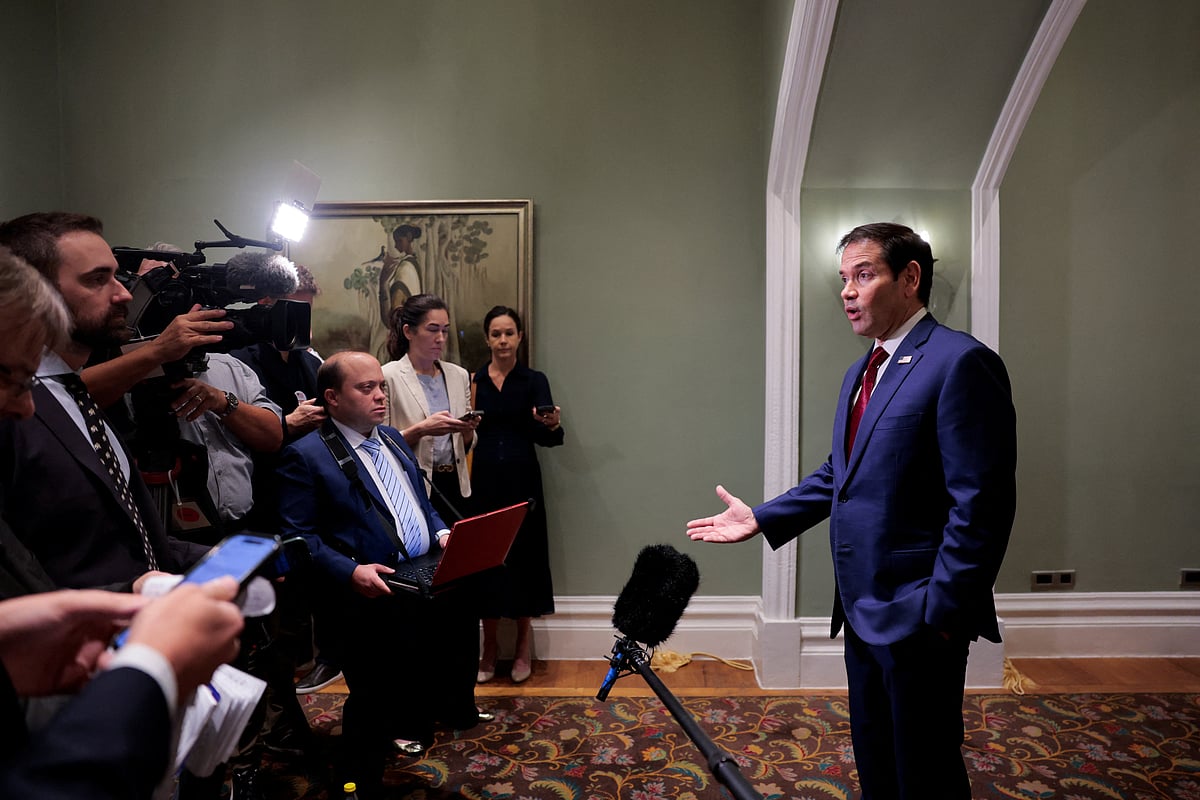
US Secretary of State Marco Rubio has publicly urged individuals seeking political change in Cuba to form a discrete partnership with the Central Intelligence Agency (CIA). This call to action, delivered via social media, marks a significant escalation in the Trump administration's strategy toward Havana. Rubio, who has been the primary architect of the administration's Cuba policy, emphasized that those dissatisfied with the current government should seize the opportunity to facilitate change through intelligence cooperation.
This development follows President Donald Trump's recent remarks at a rally in Florida, where he suggested that Washington would prioritize addressing the situation in Cuba after dealing with Iran. Trump explicitly stated that he would task Rubio with 'finishing the deal' regarding Cuba, signaling a shift toward more aggressive interventionist policies. The US has maintained a comprehensive embargo against Cuba for over 60 years, which has historically been a cornerstone of American foreign policy in the region.

Cuba is currently grappling with a severe economic crisis, exacerbated by a US-imposed oil blockade implemented earlier this year. The resulting fuel shortages have crippled the nation's infrastructure, leading to frequent and prolonged blackouts that have severely impacted the daily lives of its citizens. The Trump administration's decision to intensify pressure comes at a time when Havana is already struggling to maintain basic services under the weight of these sanctions.
Tensions have been further heightened following the US military's seizure of former Venezuelan President Nicolas Maduro in a high-profile raid earlier this year. While Cuba's foreign minister recently expressed an openness to dialogue with Washington during the UN General Assembly, the current rhetoric from the White House suggests that the US is moving toward a policy of regime change rather than diplomatic engagement. UN human rights experts have condemned the oil blockade, labeling it a violation of international law and a humanitarian concern.
As the situation evolves, the call for a partnership with the CIA is likely to be viewed by Havana as an act of subversion. The international community remains watchful, as the potential for increased instability in the Caribbean grows. The move underscores a hardening of US foreign policy, prioritizing direct intervention over the traditional diplomatic channels that have defined the relationship between the two nations for decades.