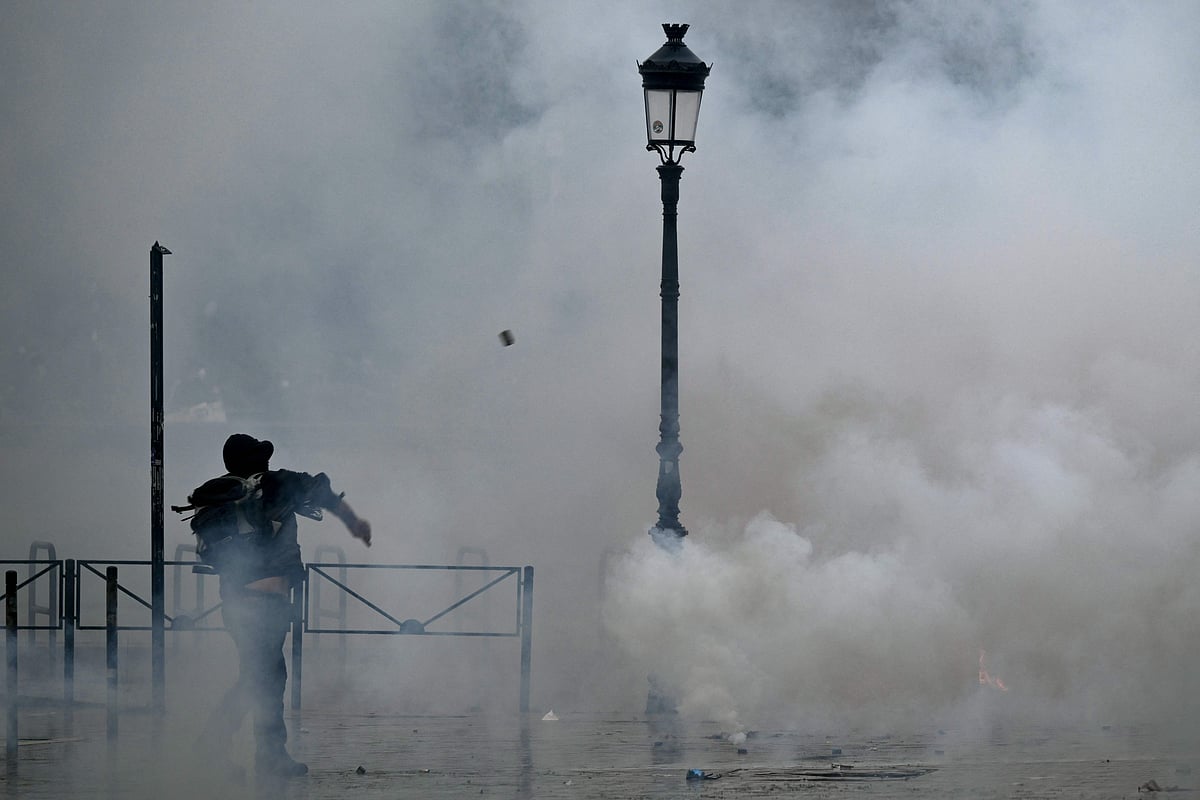
Massive protests erupted across various French cities this Saturday as students, workers, and citizens took to the streets to voice their frustration over the rising cost of living and systemic failures in public services. Despite official bans on the gatherings, thousands defied authorities in cities including Lyon, Nice, and Toulouse. Police responded by deploying tear gas to disperse the crowds, and authorities confirmed that at least 135 individuals have been arrested as of Saturday afternoon.
The current wave of unrest traces its roots back to last month, when students initially mobilized to protest against deteriorating school infrastructure and a severe shortage of teachers. Over time, the movement gained momentum, drawing in labor unions and various professional groups who are increasingly disillusioned with government policies. The situation escalated significantly on October 17, leading to incidents of vandalism and looting, which prompted the government to impose curfews in several regions.

Despite several rounds of negotiations between the government and representatives of student and labor organizations, no concrete resolution has been reached. This deadlock led to the renewed call for protests this weekend. The French Interior Ministry reported that approximately 70,000 police and security personnel were deployed nationwide to maintain order. While Paris remained relatively calm during the day, the intensity of the clashes in other major urban centers highlights the deep-seated public anger.
This unrest is part of a broader trend across Europe, where at least ten countries have witnessed demonstrations over the past week regarding inflation, corruption, and economic hardship. Protests have been reported in Spain and Albania, while security has been tightened in Italy ahead of planned demonstrations. Additionally, thousands gathered in Turkey to protest the arrest of journalists and the closure of media outlets.
Political analysts suggest that the widespread economic pressure and soaring inflation are fueling a growing sense of instability across the continent. The French government faces a critical challenge in addressing these grievances through meaningful economic reforms. Without a clear path to dialogue or policy adjustment, the potential for prolonged civil unrest remains high, keeping the nation on edge as both sides prepare for the next phase of this confrontation.