


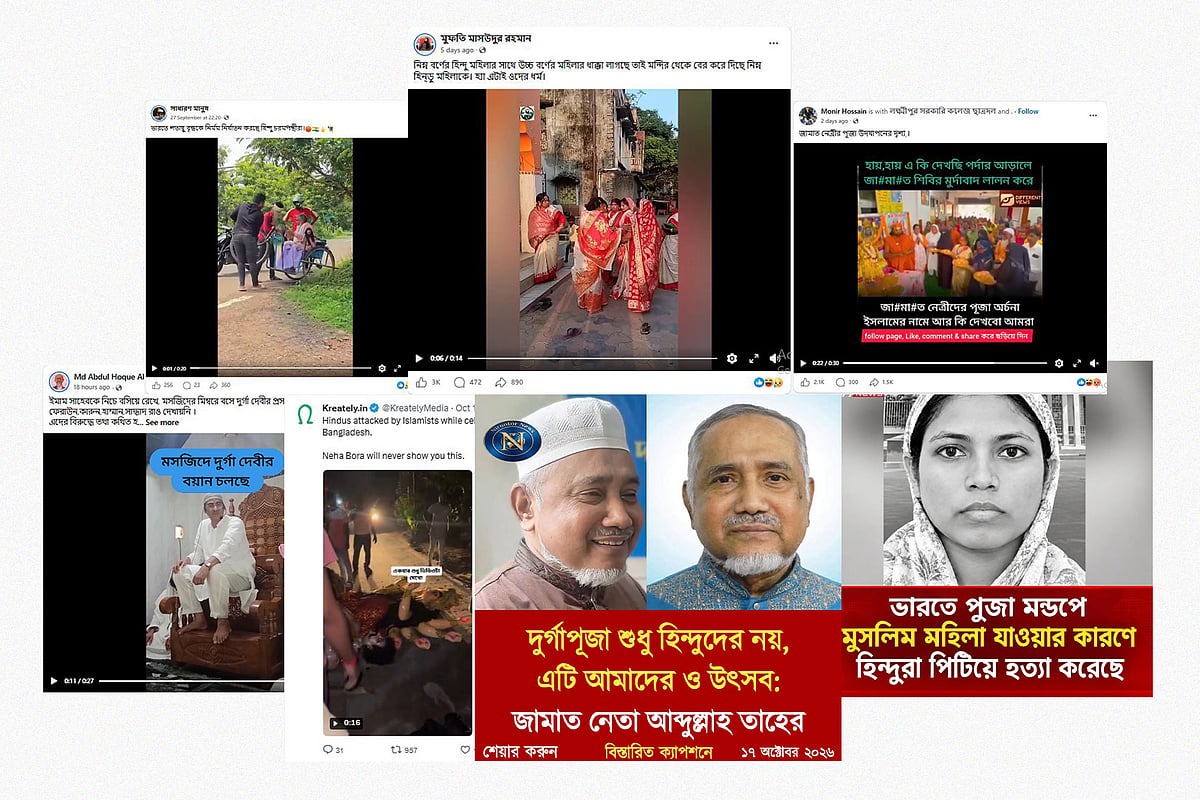
The recent celebration of Durga Puja, the largest religious festival for the Hindu community, witnessed a significant surge in misinformation and fabricated content across various social media platforms. Independent fact-checking organizations identified approximately 53 distinct instances of fake news, rumors, and manipulated media circulated between October 16 and the afternoon of October 22. These campaigns frequently employed recycled footage from past events, misleading contexts, and misattributed visuals from neighboring countries to fuel confusion and disrupt communal harmony during the festive season.
A prominent example of this malicious digital manipulation involved a heavily edited video targeting Water Resources Minister Shahid Uddin Chowdhury Annie. The viral clip depicted the minister wearing traditional attire while seated on a pulpit-like chair inside a mosque, seemingly delivering a speech about Durga Puja. Captions accompanying the video falsely claimed he was preaching about the Hindu festival from a religious pulpit. However, investigative verification revealed that the clip was a sophisticated fabrication stitched together by merging visuals from two entirely different times and locations.

The factual background traces the actual speech back to a visit by the minister to the Chaubolli Barahi Temple in Lakshmipur, his own constituency, where he exchanged pleasantries and shared festive greetings with members of the Hindu community during the Puja celebrations. The audio from this temple visit was meticulously spliced onto an entirely unrelated video of the minister speaking inside a mosque from the previous September. This digitally altered multimedia content was disseminated online with the clear intention of misleading the public and stirring unnecessary controversy.
Such coordinated efforts to spread disinformation surrounding a major national festival highlight a persistent challenge within digital spaces. Even as the five-day autumnal festival concluded with the immersion of idols on October 21, fabricated photocards, manipulated videos, and false claims continued to circulate unchecked for days. Fact-checkers noted instances where footage from unrelated international incidents was deliberately rebranded as domestic occurrences to provoke emotional reactions among netizens.
Prompt intervention and debunking efforts by specialized verification agencies played a crucial role in mitigating the fallout, preventing potential communal friction or unrest. Nonetheless, security analysts and digital experts emphasize that continuous vigilance and robust countermeasures are vital to curb the menace of cyber propaganda. Authorities have reiterated calls for citizens to exercise caution, verify sources before sharing sensational content, and report suspicious materials to maintain peace and digital hygiene across online platforms.


