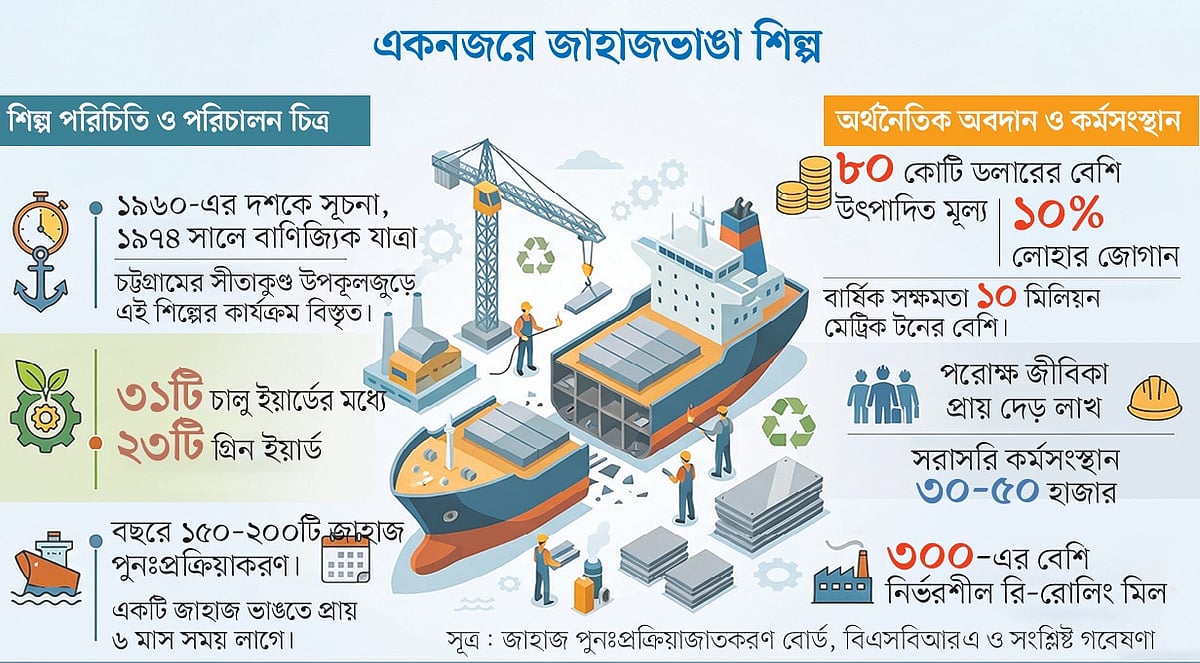
The government of Bangladesh has officially decided to reclassify the shipbreaking industry from the 'Red' category—reserved for the most environmentally hazardous industries—to the 'Orange' category. This decision was finalized during a high-level committee meeting held on September 29. The committee, established under the directive of the Prime Minister's Office, is chaired by the Minister of Environment, Forest and Climate Change, Abdul Awal Mintoo, and includes the Minister of Industries, the State Minister for Shipping, and several senior secretaries.
The move comes in response to persistent demands from shipbreaking yard owners, who argue that the 'Red' classification imposes excessive bureaucratic hurdles. According to industry entrepreneurs, obtaining permits under the current regulations takes up to 90 days, leading to significant financial losses. By shifting to the 'Orange' category, they aim to streamline operations and accelerate investment. However, this reclassification effectively removes the mandatory requirement for Environmental Impact Assessments (EIA) before establishing new yards, a change that has sparked widespread alarm among environmental activists.

The International Labour Organization (ILO) has long categorized shipbreaking as one of the most dangerous industries globally. Environmentalists emphasize that the industry is inherently high-risk and highly polluting. In regions like Chittagong, the dismantling of ships has already caused severe degradation to coastal ecosystems, soil quality, and air purity. Critics argue that relaxing regulatory oversight will only exacerbate these environmental disasters.
Furthermore, there are grave concerns regarding the safety and health of workers. Without rigorous environmental clearance and strict oversight, the working conditions in these yards could deteriorate further. Notably, the decision-making process for this reclassification excluded representatives from environmental organizations or independent experts, raising significant questions about the transparency and scientific basis of the policy shift.
While the government maintains that the goal is to balance industrial growth with environmental protection, critics argue that the current policy prioritizes commercial profit over ecological sustainability. As the nation grapples with the potential long-term consequences of this decision, environmental groups are calling for an immediate review to ensure that industrial expansion does not come at the cost of human lives and the fragile coastal environment.