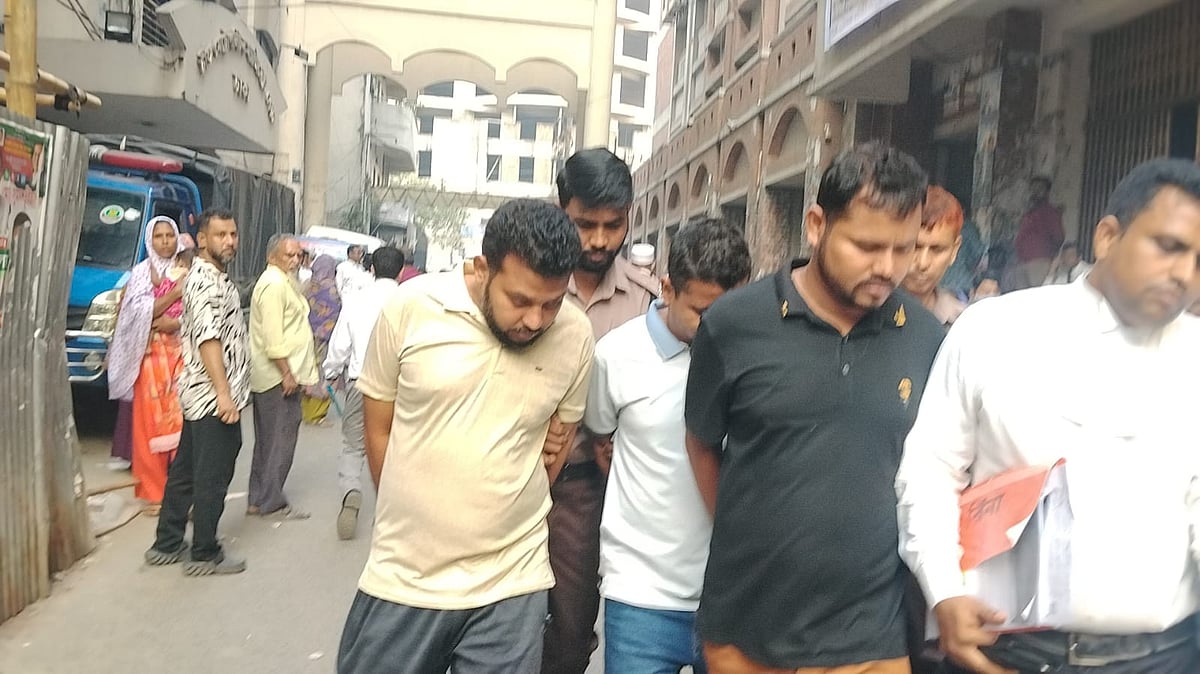
Seven accused individuals arrested over the scandalous question paper leak of the Department of Youth Development recruitment examination were produced before the Chief Metropolitan Magistrate Court in Dhaka. The investigating officer prayed for police remand, which was granted by the court for two days following a comprehensive hearing from both sides. The judicial proceedings witnessed intense questioning regarding the possession of numerous admit cards recovered from the possession of the suspects.
During the remand hearing, the presiding judge specifically questioned one of the accused about the purpose of possessing a large number of admit cards. In response, the accused claimed that his brothers-in-law and relatives were examinees in the recruitment test, attempting to justify holding the documents. However, law enforcement agencies and prosecution lawyers dismissed the excuse, pointing out that it is a facade for a deep-rooted corruption and cheating syndicate operating within various state offices.

The individuals sent on remand include Md. Mofijul Islam, Md. Rubel Islam, Md. Hasinur Rahman alias Sujan, Asadul Islam, SM Emdadul Rahman, Md. Jahangir Alam, and Nur Mohammad. Among them, Nur Mohammad works as an office assistant at the National Board of Revenue (NBR), while Md. Jahangir and SM Emdadul Islam serve as computer operators. Furthermore, Asadul Islam is employed as an office assistant at the Ministry of Defense, Rubel works as a data entry operator at the Department of Environment, and Mofijul along with Hasinur operate as active members of the core question-leaking syndicate.
The incident came to light on October 10, when the recruitment test for Assistant Youth Development Officers was scheduled to take place. Moments before the commencement of the examination, question papers along with solved answers surfaced on Facebook. Upon comparison, authorities found the leaked sheets to be identical to the original question papers, prompting an immediate cancellation of the exam to maintain fairness and academic integrity. Law enforcement agencies subsequently launched a robust investigation, leading to the apprehension of the seven suspects.
Preliminary interrogation and investigative findings revealed that the syndicate had entered into lucrative agreements with desperate candidates, charging up to one million local currency units per person to supply leaked questions and answers prior to the test. To secure these illegal deals, the fraudsters collected 116 non-judicial stamp papers worth one hundred currency units each, along with academic and personal documents from the job seekers. Investigators believe that interrogating the suspects during the two-day remand will unearth further connections and expose other high-level collaborators involved in compromising national recruitment exams.