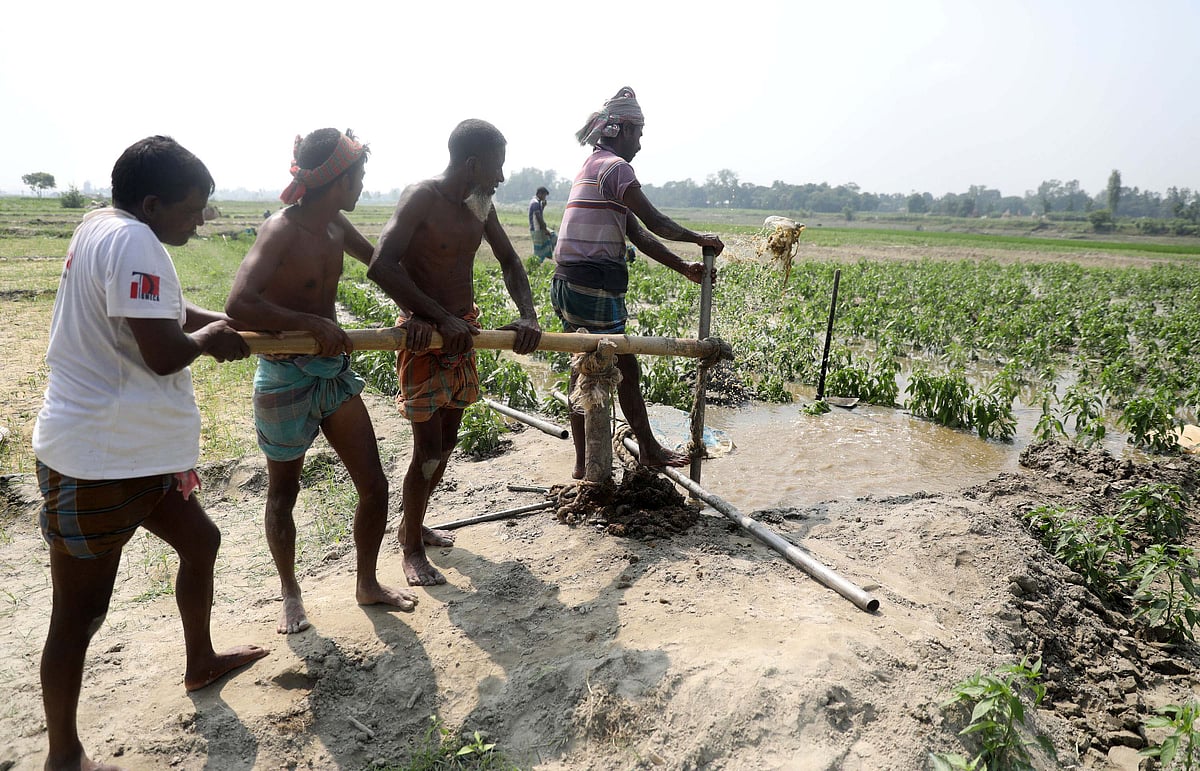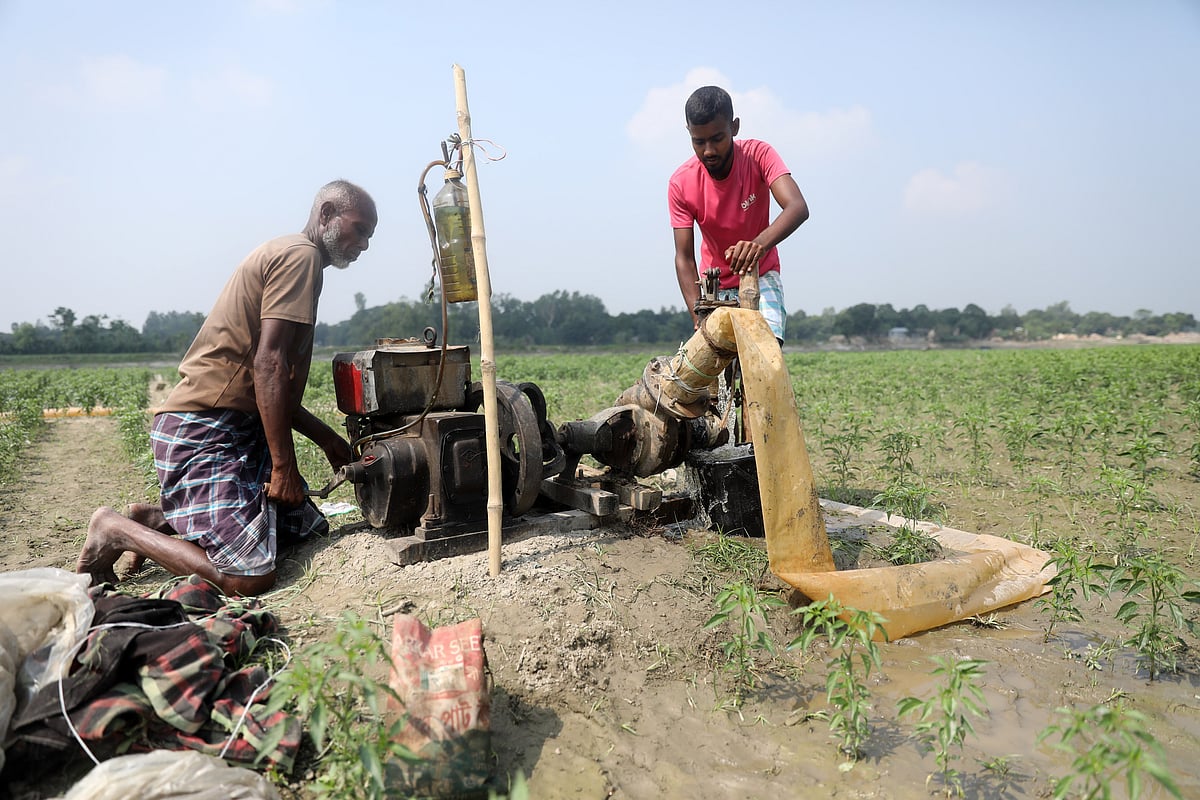
The remote char lands emerging from the riverbeds of the Jamuna River have long held immense potential for agricultural production in Bangladesh. In recent times, special emphasis is being placed on extracting groundwater to alleviate chronic water scarcity faced by farmers in these isolated riverine islands. Although modern agricultural technologies are scarce in these areas, local farmers have taken the initiative to install shallow machines and boreholes to maintain uninterrupted irrigation for their crops. The ongoing process of drilling boreholes to secure reliable underground water sources is bringing new hope to the agrarian communities inhabiting the chars.
Vast expanses of the char lands are now vividly decorated with expansive chilli fields, golden paddy fields, and lush green jute farms. During dry spells or periods of insufficient rainfall, this groundwater irrigation system becomes the ultimate lifeline for the farmers. However, the path to implementing this mechanized irrigation is fraught with immense hardships. Due to muddy terrain, rugged pathways, and underdeveloped communication networks, farmers are forced to carry heavy shallow machinery across difficult routes on foot or small boats, enduring backbreaking labor to set up the equipment in remote fields.

From an agricultural economy perspective, the farmers and laborers of the char regions make vital contributions to the nation's food production. Because the silt-rich soil of the chars is exceptionally fertile for chilli cultivation, commercial production has flourished significantly. Alongside chilli and paddy, farmers diligently manage disease-affected jute fields by applying necessary pesticides and ensuring timely irrigation. Working tirelessly through scorching heat and unpredictable weather, they successfully harvest abundant yields from otherwise barren-looking landscapes.
The daily routine of these farmers also highlights the stark challenges they face regarding basic amenities, such as quenching their thirst with limited drinking water during grueling work breaks under the scorching sun. Despite the lack of modern infrastructure and electricity, their relentless dedication showcases the extraordinary resilience of rural agriculturists. If the government and relevant agricultural authorities can introduce modernized irrigation infrastructure and solar-powered pumps to these chars, agricultural output could multiply exponentially.
Looking ahead, these char basins along the Jamuna River possess the potential to evolve into major agricultural hubs for the country. The diverse crops produced here, ranging from spices and grains to cash crops, can significantly fulfill regional market demands and bolster the national economy. Agricultural analysts emphasize that providing institutional support and subsidized equipment to these char farmers will further reinforce the nation's overall food security and rural livelihood standards.